White Label WordPress Hosting & Support: The Hidden Recurring Revenue Model for Agencies

Winning new clients feels great. But what happens after the website goes live?

For many web design and development agencies, that’s where the revenue stops.

Months of prospecting, pitching, designing, developing, revising, and launching a website often result in a single payment. Once the project ends, the agency is back to finding its next client. It’s a cycle that creates inconsistent cash flow, unpredictable workloads, and constant pressure to sell.

Now imagine what if every website you built could continue generating revenue month after month, even years after launch.

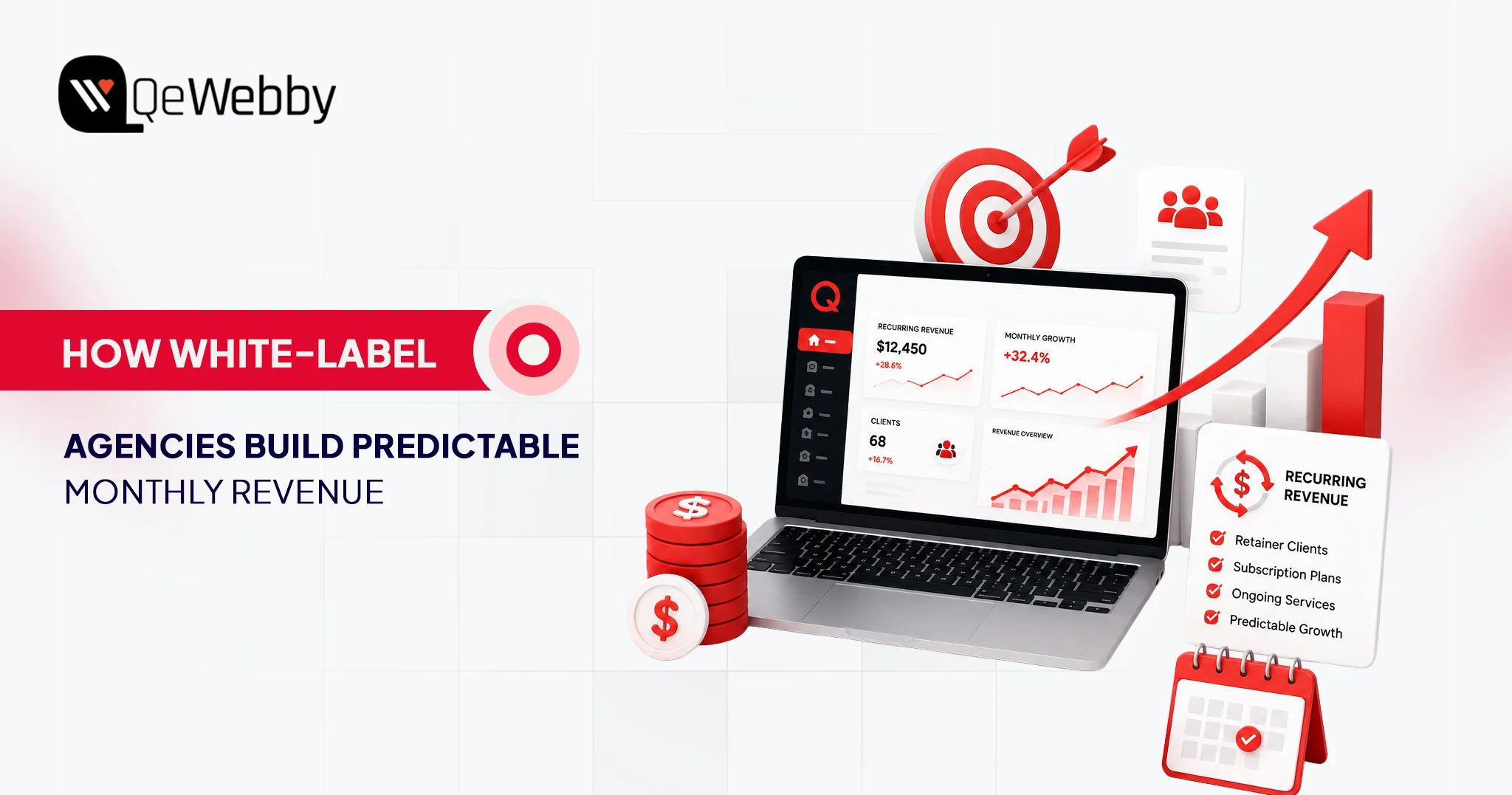
Instead of treating hosting and maintenance as an afterthought, successful agencies are packaging them into recurring service plans. The result is a stable monthly income, stronger client relationships, and a business model that scales far more efficiently than relying on one-time projects alone.

Having an increased 5% customer retention can result in profits by 25% to 95%, as per the report by Bain and Company. So, this is why agencies are increasingly investing in recurring service models.

What Is White Label WordPress Hosting?

For many agencies, offering website hosting seems like the logical next step after delivering a WordPress website.

However, managing hosting infrastructure, server security, software updates, backups, and uptime monitoring requires technical expertise that most agencies would rather invest elsewhere.

White label WordPress hosting solves this challenge by allowing agencies to provide fully managed hosting services under their own brand while a specialized infrastructure partner handles the technical execution behind the scenes.

From the client’s perspective, every interaction remains with your agency. They receive hosting, maintenance, and technical support branded as your own service, while the white-label provider manages the servers, security, monitoring, and performance optimization invisibly.

How Does White Label WordPress Hosting Work?

The delivery model is straightforward.

  • The agency sells managed WordPress hosting as its own service.
  • Client websites are hosted on the white-label provider’s infrastructure.
  • The hosting partner manages all technical operations.
  • The agency continues to own the client relationship, communication, and billing.

This allows agencies to focus on strategy, development, and client growth while technical infrastructure is managed by specialists.

Why Clients Prefer Managed Hosting From Their Agency

Most business owners don’t want separate vendors for development, hosting, maintenance, backups, and technical support. They prefer working with one trusted partner who already understands their website. White label hosting allows agencies to deliver that experience without building their own infrastructure.

Why Recurring Revenue Has Become the Foundation of Scalable Agency Growth?

The economics of recurring revenue fundamentally differ from those of project-based services.

Instead of generating income only when new work is secured, recurring services establish a predictable revenue base that compounds as the client portfolio grows.

Every new client represents not only an immediate project opportunity but also a long-term revenue stream through hosting, maintenance, security, technical support, and ongoing website optimization.

Predictable monthly recurring revenue improves cash flow visibility, simplifies resource planning, and enables agencies to make hiring and investment decisions based on reliable income rather than anticipated project pipelines. As recurring revenue increases, agencies become less dependent on continuously replacing completed projects with new engagements.

Over several years, recurring hosting and support services often exceed the financial value of the original development project while requiring significantly lower acquisition costs.

The difference between the two business models is substantial.

Project-Based Revenue Recurring Revenue Model
One-time project income Predictable monthly recurring revenue
Continuous client acquisition required Existing clients generate ongoing revenue
Revenue fluctuates with the project pipeline Greater financial stability
Lower customer lifetime value Higher long-term account value
Limited post-launch engagement Continuous client relationship and upselling opportunities

White Label WordPress Support: The Missing Piece in Agency Retainers

Hosting keeps a website online, but long-term client satisfaction depends on much more than server availability. WordPress websites require continuous maintenance to remain secure, compatible, and optimized as plugins, themes, PHP versions, and the WordPress core evolve.

This is where white-label WordPress support becomes an equally valuable recurring service.

Rather than responding only when a client reports a problem, agencies can offer proactive website management as part of a monthly support plan. This transforms the agency’s role from project vendor to long-term technology partner while creating predictable recurring revenue.

Services Typically Included in White Label WordPress Support

A professionally managed support service commonly covers:

Service Business Value
WordPress core updates Maintains compatibility and security
Plugin and theme updates Prevents conflicts and vulnerabilities
Daily or scheduled backups Enables rapid disaster recovery
Malware scanning and removal Protects websites against cyber threats
Website uptime monitoring Detects downtime before users are affected
Performance optimization Improves loading speed and user experience
Technical troubleshooting Resolves website issues quickly
Monthly maintenance reports Demonstrates ongoing service value

By combining hosting with continuous support, agencies provide clients with a complete website management solution rather than a standalone hosting package.

Many agencies bundle WordPress maintenance services into the same monthly care plan, helping clients keep their websites secure, updated, and performing reliably while creating an additional recurring revenue stream.
Book a Free Consultation

Why Managed WordPress Hosting Has Become a Strategic Agency Service?

Over the past decade, websites have evolved from static digital brochures into mission-critical business assets. For many organizations, even a few hours of downtime, security compromise, or poor website performance can result in lost revenue and diminished customer trust.

As a result, businesses increasingly expect their agencies to manage not only website development but also the ongoing health of their digital platforms.

This shift has elevated white label managed WordPress hosting from an optional add-on to a strategic service offering.

Unlike traditional hosting, managed hosting combines infrastructure, security, monitoring, maintenance, and performance optimization into a single solution. Clients benefit from a simplified experience with one trusted partner, while agencies strengthen long-term relationships through continuous service delivery.

The difference between traditional hosting and managed hosting illustrates why more agencies are adopting this model.
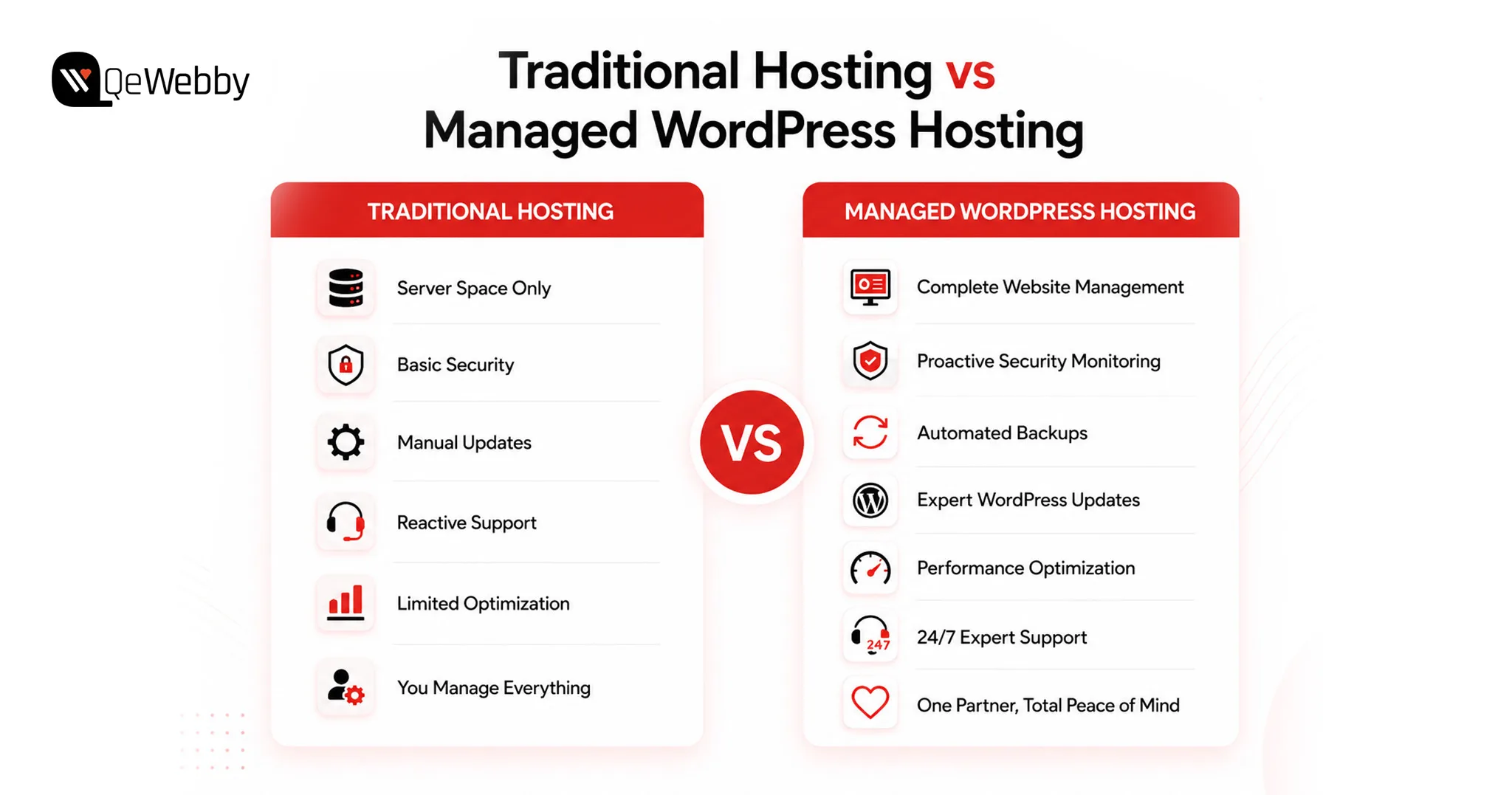
Traditional Hosting vs Managed WordPress Hosting

Traditional Hosting White Label Managed WordPress Hosting
Server space only Complete website management
Reactive issue resolution Proactive monitoring and maintenance
Client manages updates Updates managed by specialists
Limited optimization Continuous performance improvements
Basic security Multi-layer security monitoring
Separate maintenance providers Single integrated solution

For agencies, this integrated approach creates opportunities that extend far beyond hosting fees.

How Agencies Price White Label WordPress Hosting

Service Typical Monthly Fee
Hosting $25–$75*
Hosting + Maintenance $75–$150*
Premium Care Plan $150–$500+*

The exact pricing depends on website complexity, traffic, support requirements, and included services.

The Hidden Recurring Revenue Opportunity Most Agencies Overlook

Every website project represents more than a one-time development engagement. It also creates an opportunity to deliver ongoing services that clients will continue to require throughout the lifecycle of their website.

Unfortunately, many agencies stop at project delivery.

Once the website is launched, hosting is often outsourced to third-party providers, maintenance becomes reactive, and technical support is provided only when clients raise issues. In doing so, agencies unintentionally hand over a significant recurring revenue opportunity to hosting companies and managed service providers.

A more sustainable approach is to treat every website launch as the beginning of a long-term service relationship.

The progression typically looks like this:

Website Development

Managed WordPress Hosting

Website Maintenance

Security Monitoring

Technical Support

Performance Optimization

Monthly Reporting

Additional Digital Services

Each layer increases client value while creating another predictable revenue stream for the agency.

Over time, these recurring services often generate more cumulative revenue than the original development project itself. More importantly, they strengthen client retention because the agency becomes responsible for the ongoing performance, security, and reliability of the client’s digital presence.

Why Do Agencies Choose White Label Partners Instead of Building Everything In-House?

Offering managed hosting independently requires considerably more than purchasing server space. Agencies must also establish monitoring systems, backup processes, security protocols, disaster recovery plans, performance optimization workflows, and technical support capabilities.

Building and maintaining this infrastructure requires continuous investment in both technology and specialist expertise.

For many agencies, this approach introduces unnecessary operational complexity.

Partnering with a white-label WordPress agency offers a more efficient alternative. Instead of managing infrastructure internally, agencies leverage an experienced fulfillment partner while maintaining complete ownership of the client relationship.

The difference between the two approaches is substantial.
Checklist Before Choosing a White Label WordPress Partner

Managing In-House White Label WordPress Hosting
Invest in hosting infrastructure Infrastructure managed by partner
Hire server and security specialists No additional technical hiring
Maintain monitoring and backup systems Fully managed operations
Handle 24/7 technical issues Expert support team manages incidents
Higher operational overhead Lower operating costs
Longer service launch timeline Immediate market readiness

For growing agencies, this model enables faster expansion while minimizing operational risk. Internal teams remain focused on delivering high-value client work rather than managing hosting infrastructure.

What to Look for in a White Label WordPress Agency?

Not every hosting provider is designed to support agency growth. Selecting the right white label WordPress agency requires evaluating both technical capabilities and operational maturity.

The ideal partner should function as an extension of your agency, delivering enterprise-grade hosting and support while remaining completely invisible to your clients.

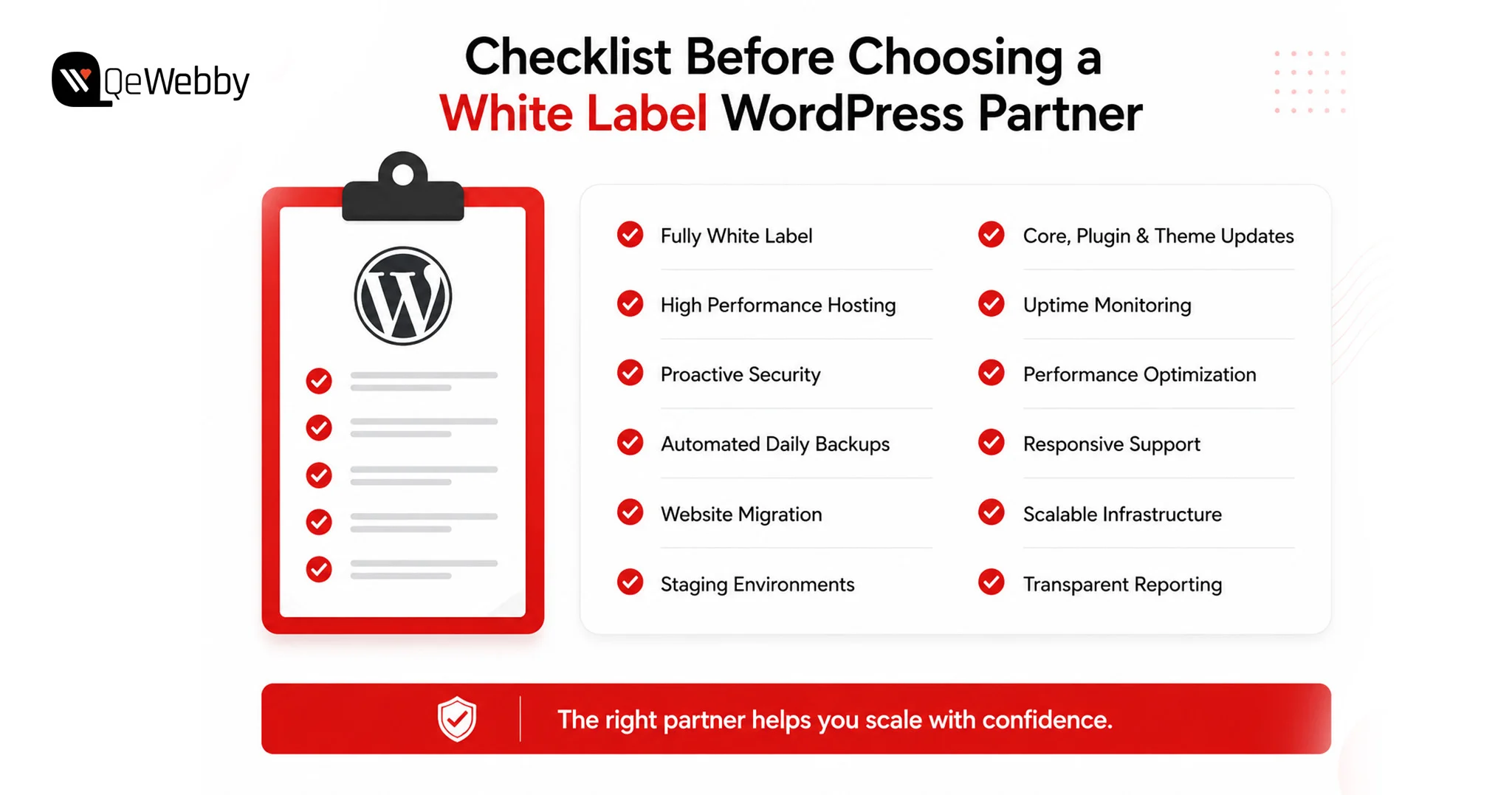
When evaluating providers, consider the following capabilities:

  • Fully white-labelled service delivery
  • High-performance managed WordPress hosting
  • Proactive security monitoring
  • Automated daily backups
  • Malware detection and removal
  • WordPress core, plugin, and theme updates
  • Website migration assistance
  • Performance optimization
  • Staging environments
  • Reliable uptime monitoring
  • Responsive technical support
  • Scalable infrastructure for growing client portfolios

Beyond technical expertise, agencies should also evaluate communication standards, service-level commitments, and the provider’s ability to support long-term growth.

How QeWebby Helps Agencies Build Predictable Recurring Revenue?

At QeWebby, we understand that agencies want to expand their service offerings without increasing operational complexity. Our white label managed WordPress hosting and white label WordPress support services are designed to help agencies achieve exactly that.

Rather than investing in infrastructure, technical resources, and ongoing server management, agency partners gain access to a fully managed WordPress environment delivered under their own brand.

  • Our services include:
  • Fully managed WordPress hosting
  • White-label WordPress maintenance
  • Security monitoring and malware protection
  • Daily backups and disaster recovery
  • Performance optimization
  • Website migration
  • Core, plugin, and theme updates
  • Technical troubleshooting
  • Continuous uptime monitoring
  • Scalable hosting infrastructure

Throughout the engagement, agencies remain the primary point of contact for their clients while QeWebby manages the technical execution behind the scenes.
Talk To Our Experts

Conclusion

Winning new projects will always matter, but predictable recurring revenue is what creates a sustainable agency. White label WordPress hosting and support transform every website launch into a long-term business relationship, allowing agencies to increase client lifetime value while reducing dependence on constant project acquisition.

At QeWebby, we help agencies expand their capabilities with reliable white label WordPress hosting and support solutions that integrate seamlessly into their existing service portfolio.

Our expertise enables agencies to scale confidently while maintaining complete ownership of the client experience. Contact us to explore how we can help you build a stronger recurring revenue model for your agency.
Top Benefits of Outsourcing WordPress Development (Beyond Just Saving Money)

Someone hires a WordPress developer. Three months later, the site still isn’t live. Feature velocity stalls. Technical debt piles up until delivery grinds down. The paycheck clears every two weeks. The launch date keeps sliding. The business ends up worse off than when it started.

Nobody likes admitting how often this happens. Especially in the “velocity-first” trap: teams that look fast out of the gate, then stall once they hit a codebase they never understood.

That’s why most companies get outsourcing wrong. They treat it like a coupon to dodge a salary line, nothing more. That framing skips the mechanics that decide whether a project ships or turns into a slow bleed of lost rankings and drained ad income.

Hiring in-house is expensive. Offshore development often costs less. Everyone knows that part. What rarely makes the pitch is the engagement model. How the work’s structured matters more than where the developer sits. Someone embedded in your process, who understands the codebase before touching it, tends to succeed.

This guide covers both the cost savings everyone expects and the operational advantages that usually become obvious after a few months. Protecting your revenue through deployment discipline. Keeping full ownership of your assets and credentials.

What Outsourcing WordPress Development Actually Means in Practice

In practice, outsourcing WordPress development means handing site builds, customizations, and maintenance to outside specialists who bring operational elasticity and technical chops you don’t have to build in-house. It’s not one transaction. It’s a spectrum: bounded freelance tasks on one end, dedicated offshore engineers sitting inside your Slack and Jira on the other.

1. The Three Primary Engagement Models

The structure you pick determines the risk you’re carrying, not the other way around.

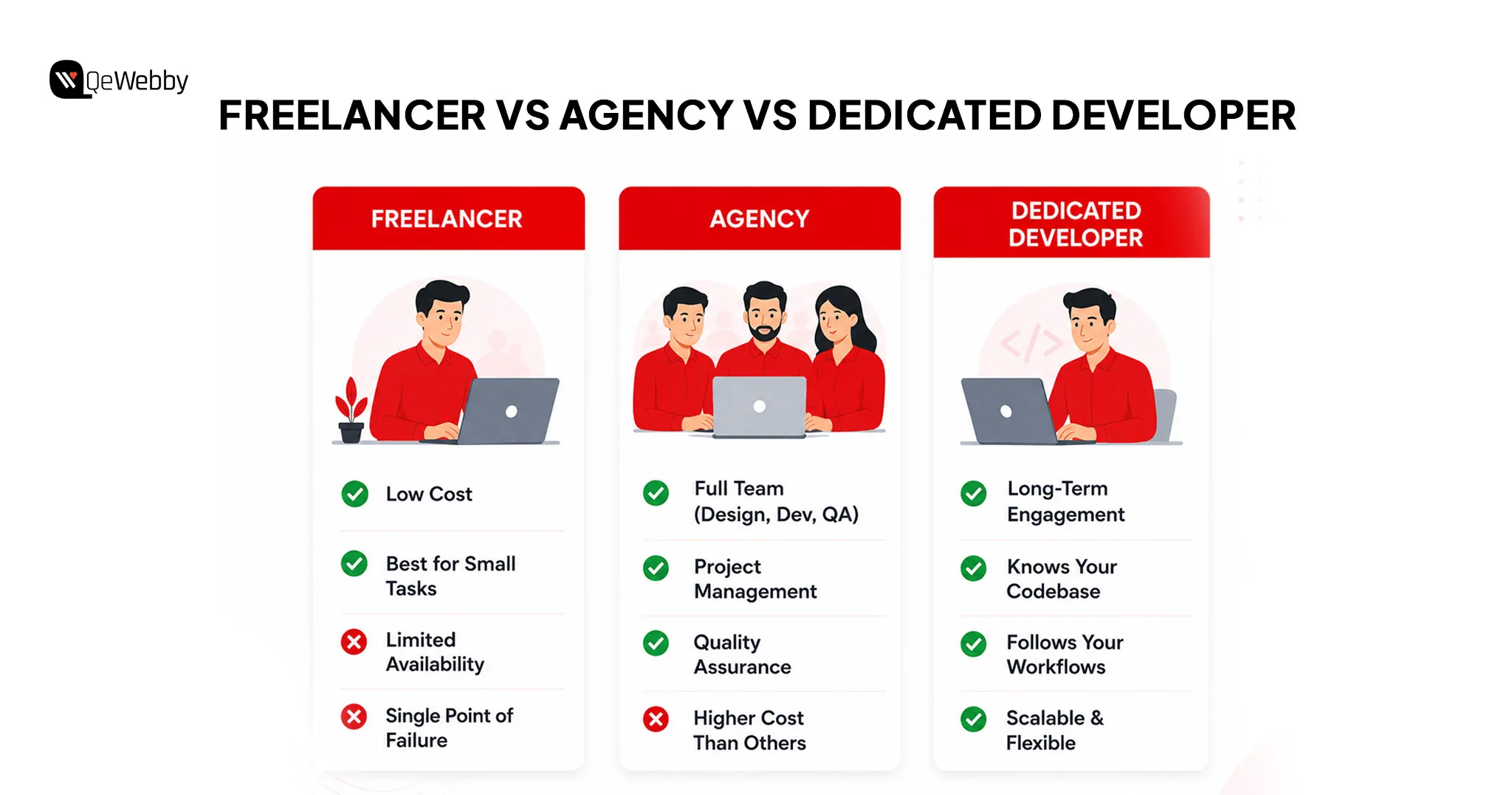
  • Freelancers (Task-Based): Good for a bounded fix with a clear finish line. Cheap, sure. But the “bus factor” is real. One person disappears, and the project stalls.
  • Agencies (Project-Based): Makes sense for multi-discipline builds (design, dev, QA) under a tight deadline. You’re paying for someone else to absorb the coordination overhead. That shows up in the blended rate.
  • Dedicated Offshore Developers (Integrated): Where most SMBs and agencies land for ongoing work. The developer works exclusively for you, learns your codebase, workflows, and engineering standards. This is the model that actually holds up over time, unlike distant vendors working strictly off a ticket queue with zero context.

Freelancer Agency Developer

2. Operational Elasticity and the “Follow-the-Sun” Model

Scale up for a launch. Scale down once things settle. No long-term hire to unwind when the busy season ends.

In practice, this usually runs on a follow-the-sun loop. Internal teams hand off tasks at the end of their day. Offshore teams in India, Southeast Asia, or Eastern Europe pick up the work overnight. By morning, it’s sitting there ready for testing. Your development cycle effectively continues around the clock.

3. The “Revenue Firewall”: Deployment Discipline

At scale, outsourcing stops being about “just building” and becomes about enforced deployment controls. Here’s why that matters: a bad deploy on a high-traffic site isn’t a support ticket. It’s a revenue event. Ad income and search rankings can take a hit within hours, not weeks.

  • Deployment Constraints: Serious partners work inside strict pipelines (the kind WordPress VIP mandates), which means pre-production code review and continuous performance monitoring, not a quick push and a prayer.
  • SEO as Engineering: Treated as a technical deliverable. Commits get checked against structured data and Core Web Vitals before they ship, not after something breaks.

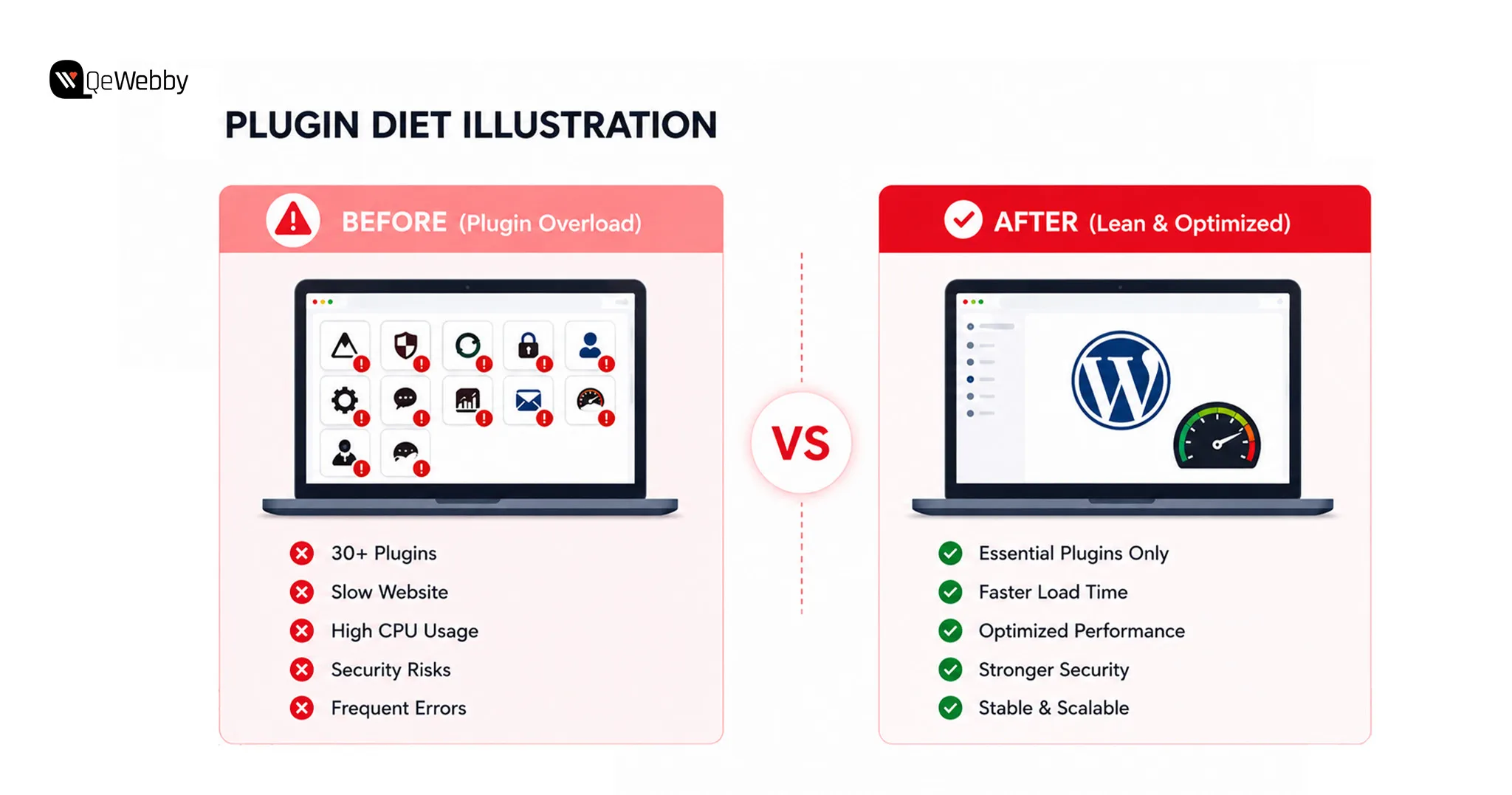
4. Architectural Optimization (The “Plugin Diet”)

Professional outsourcing tends to strip out technical debt and plugin bloat. Amateur builds lean on heavy plugins for features that barely matter, chewing through CPU and PHP resources they don’t need to.

Experienced developers move that weight off the WordPress application layer entirely. Security firewalls, image optimization, caching: pushed to the server or edge network instead. The site ends up leaner. Faster. More stable.

5. What Must Remain In-House

Even in a fully outsourced setup, a few things stay close to home.

  • Site Strategy: Hosting stack decisions, architectural direction, which plugins actually carry weight in the build.
  • Asset Ownership: Full ownership of source code, hosting panel, domain registrar, DNS. No exceptions.
  • Brand Voice: Content direction and messaging hierarchy stay internal. Nobody outside the business should be deciding how it sounds.

The Expected Benefits (That Everyone Already Knows)

It Costs Less Than an In-House Developer

Hiring in-house starts weeks before anyone writes code. Scope the role. Build the application process. Post it. Screen resumes. Interview. Onboard. None of that ships a single feature. And that’s before salary, benefits, and overhead even show up on the spreadsheet.

Outsourcing skips all of it. The business pays for work when it needs the work, not a fixed headcount sitting there during a slow quarter.

Is it cheaper for defined-timeline projects specifically? Almost always, yes, because benefits, office space, and equipment costs disappear entirely. That’s the structural reason the savings number from the intro holds up whether the business has five employees or five hundred.

It Gives Instant Access to Specialists

Outsourcing puts a business in front of a global bench of developers who’ve already solved the exact WordPress problem the business is hitting for the first time. Custom themes, advanced functionality, the stuff an internal generalist genuinely cannot pull off no matter how sharp they are.

One in-house hire usually knows a bit of everything. Outsourcing flips that. Now it’s specialists who do one narrow thing extremely well, every day, across dozens of client sites.

Top 6 Unexpected Benefits Nobody Talks About Until After They Try It

The following, however, is what comes on the calendar after three months of planning for the outsourcing arrangement, and it’s really why companies that attempt outsourcing hardly ever come crawling back to the traditional approach.

Unexpected Benefit 1: The In-House Team Suddenly Achieves More

Few businesses realize this before they outsource. When the company sets up its own WordPress team, all the technical problems become everyone’s problem. A malfunctioning plug-in isn’t just a headache for the developer.

It’s also a problem for the marketing manager who needs a page launched right now, the founder dragged into a Slack channel against their will, and the sales team watching helplessly as the promised landing page fails to launch.

Move development outside the building, and the marketing team markets. Sales sells. The founder actually gets to think about strategy instead of getting looped into a debugging session over a plugin conflict nobody understands.

Outsourcing web development buys agility, and it lets a business scale operations without adding headcount. Internal attention stays locked on the work only internal people can do, while the outside team handles execution.

Unexpected Benefit 2: Development Happens While the Business Sleeps

Offshore teams often sit in a completely different time zone. By the time the internal crew logs on, a full development cycle has usually already happened overnight.

That gap isn’t a scheduling headache to work around. Used right, it means development and support run around the clock instead of going quiet at 6pm.

For anything deadline-driven, or an urgent fix that can’t wait until Monday, that overlap is a genuine edge. No single-time-zone in-house team, however good, can match it.

Unexpected Benefit 3: The Site Gets Built Faster Than Any Internal Team Could Manage

Outsourced agencies start immediately. The team already exists. Compare that to hiring in-house, where finding one qualified WordPress developer can eat most of a two-month project window before a single line gets written.

Experienced outsourced teams have already shipped dozens, sometimes hundreds, of WordPress projects. They show up with workflows, starter templates, and processes that have already absorbed the trial and error that slows down a first-time internal build.

Four months for an internal team. Six to ten weeks for a specialized outsourced one, doing the same job. Not because anyone’s cutting corners. Because the team has run this playbook enough times to know exactly where the delays hide.

Unexpected Benefit 4: Built-In Quality Control the Business Does Not Have to Manage

Professional outsourced agencies bring their own QA process, code review, and testing protocol to every project by default. Quality stops being something a business owner has to invent from scratch.

That means functionality tests, cross-browser checks, security audits, and performance passes, all measured against actual WordPress coding standards, not just whatever the last developer happened to know.

Something breaks after launch? A reputable agency fixes it. Not the business owner, alone, on a laptop at 11 pm trying to remember which plugin update caused the mess.

Unexpected Benefit 5: Scale Up or Down Without a Single HR Conversation

Outsourcing lets a business dial development effort up or down based on actual demand, no long-term contract required. For anything with seasonal swings or a sudden growth spurt, that’s hard to overstate.

One month the business needs a full team for a major launch. Next month, just routine maintenance. Outsourcing absorbs both without redundancy costs or an uncomfortable conversation about cutting hours.

This matters most for agencies juggling several client projects on unpredictable timelines, where a fixed in-house headcount either sits idle or gets buried depending on the week.

Unexpected Benefit 6: The Business Gains a Security Advantage It Did Not Budget For

WordPress gets targeted constantly, simply because it runs so much of the web. Bring in a team with dedicated security chops, and proactive measures against data breaches and unauthorized access come standard, not bolted on afterward.

Only 22% of companies handling WordPress security in-house actually have a documented breach response plan. Outsourced agencies that specialize in this tend to be better equipped by default. Security is the job, not a side task someone’s developer squeezes in between features.

Ongoing outsourced maintenance means plugin updates happen on schedule, vulnerabilities get patched before bots find them, and backups actually get verified instead of just assumed to be running somewhere in the background.

First-time outsourcers often start small, a single contained project through a WordPress development service, instead of jumping straight into a long-term commitment. Low risk, and it lets the business judge code quality, communication speed, and delivery discipline before scaling anything. For what a site needs before it even gets to this stage, see our breakdown of must-have WordPress features for a client website.

Outsourcing vs In-House: The Honest Comparison Nobody Wants to Do

What the Real Numbers Look Like Side by Side

Factor In-House Developer Outsourced Team
Monthly cost $3,831 to $7,045 $500 to $3,000 depending on scope
Time to start 4 to 12 weeks to hire 1 to 5 days to onboard
Skill range One person’s knowledge Full team of specialists
Scalability Fixed headcount Flexible up or down instantly
Quality control Business manages it Agency manages it
Time zone coverage Business hours only 24-hour development possible
Risk Business owns all of it Shared via contract and SLA

When In-House Still Makes More Sense

Outsourcing isn’t right for every business. Pretending otherwise helps nobody. In-house tends to win when:

  • The product IS the WordPress site, as with a SaaS platform where development is the core business activity rather than a supporting function
  • Daily work requires deep knowledge of internal proprietary systems an external team cannot realistically access
  • The business has already built a strong internal development culture worth preserving
  • The budget comfortably supports a full-time senior developer and their long-term retention without strain

Book a Free Strategy Consultation

The Hybrid That Most Growing Businesses Land On

Most companies don’t end up fully in-house or fully outsourced. They land somewhere in between: one internal developer or technical lead owns strategy, requirements, and review, and an outsourced team handles execution.

That setup gives the business control without the full overhead, plus specialist skills on demand without paying for them year-round. Leverage expertise from wherever it happens to sit, deliver strong results to clients, and keep internal focus exactly where it belongs, on what only the internal team can actually do.

How to Outsource WordPress Development Without Getting Burned?

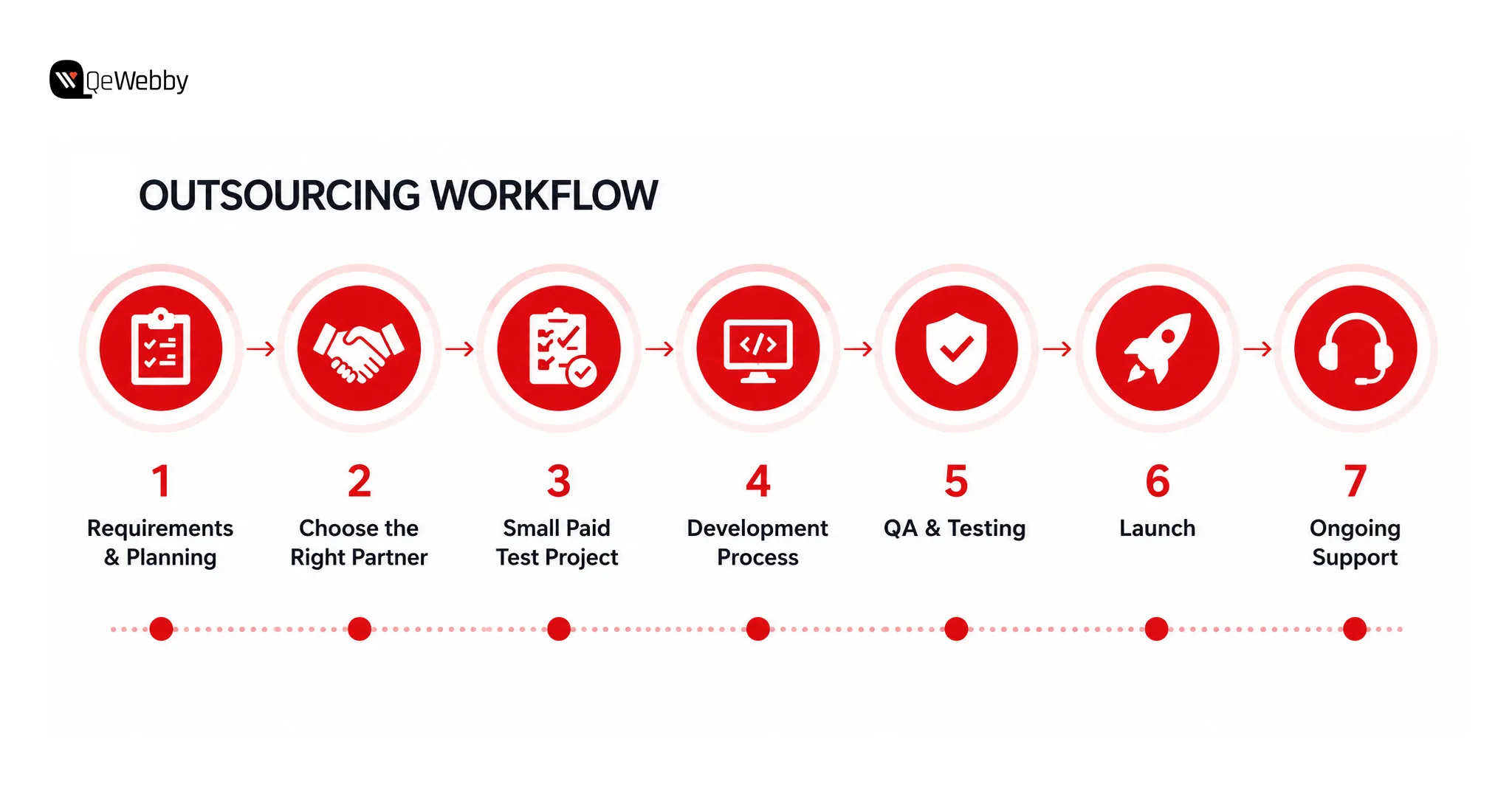
Here are some of the key steps that you can follow to ensure efficient outsourcing of WordPress development.

Outsourcing Workflow

Define Exactly What Is Needed Before Talking to Anyone

The most common outsourcing mistake happens before the first vendor call. Businesses start pricing conversations before they actually know what the project requires.

Write a one-page brief. Project goal, pages or features needed, a realistic budget range, timeline, and any technical requirements tied to existing systems. A clear brief gets an accurate quote. A vague one gets an inflated quote padded with contingency buffers to cover everything the vendor can’t predict.

Evaluate Agencies on the Right Things

Look for a WordPress-specific portfolio, verifiable client reviews, a QA process they can actually explain, and a documented post-launch support policy.

Read the reviews. Check the case studies. Strong testimonials, especially from other agencies rather than anonymous reviewers, are a decent signal the provider hits deadlines and communicates clearly under pressure.

Ask for two or three references before signing anything. Then actually call them. Most businesses skip this step. Most of them regret it exactly once.

Start With a Paid Test Before Committing to a Long Engagement

Send a small, clearly scoped paid task before signing anything long-term. It reveals quality and communication style faster than any portfolio review or interview ever will.

For agencies specifically, ask for examples of past agency partnerships. A reliable WordPress provider follows documented coding standards and runs a clear QA process without needing to be asked twice.

Use milestone-based payments tied to specific deliverables. Never pay the full project cost upfront, no matter how confident the agency sounds on the sales call.

Agencies that resell WordPress development work to their own clients often lean on a white-label WordPress development service to make the model work. The outsourced team builds under the agency’s brand, the agency delivers to its client, and the end client never learns a third party touched the project. It’s how small agencies take on bigger, more numerous clients without hiring full-time staff they can’t yet justify.

Talk to a wordpress consultant

The Question Every Business Asks Before Outsourcing: “What If It Goes Wrong?”

Most outsourcing articles stay relentlessly upbeat and skip the part sitting behind every business owner’s hesitation: what actually happens when it goes sideways. That deserves a straight answer, not another list of upsides.

The Real Risks of Outsourcing WordPress Development

  • Poor quality code that is difficult to maintain or hand over to a different developer later
  • Communication breakdowns that cause delays and missed deadlines
  • IP and data security concerns tied to sharing hosting credentials and content access with an outside team
  • Dependence on a single organization, where the project comes to a halt the instant the organization goes silent
  • Hidden expenses due to scope creep, additional revision costs, or regular fees which were never made clear at the beginning

How to Safeguard the Business While Outsourcing?

Put down everything into an agreement including deliverables, deadlines, revision cycles, code ownership, and post-launch support policies in black and white. No exceptions.

Develop in a staging environment and never give outsourced developers access to the live site until they have proved themselves on a different project first.

Ensure that it is clearly stated in the agreement that the business holds 100% ownership of the code and assets provided

Green Flags That Tell the Business an Agency Can Be Trusted

  • They ask detailed questions about the project before quoting, not the other way around
  • They can explain their QA and testing process clearly without being asked
  • They provide a written contract without the business needing to request one
  • Communication is fast, professional, and specific from the very first interaction
  • They have verifiable client reviews on third-party platforms like Clutch, Google, or Upwork, not just testimonials sitting on their own website

Before signing with anyone, it’s worth running through our WordPress security checklist, so the business knows exactly what to ask a prospective vendor about their security practices.

Hire Dedicated WordPress Developers

Outsourcing WordPress Development Is Not a Cost Decision. It Is a Growth Decision.

The businesses that outsource WordPress development and never look back aren’t doing it because they ran out of budget for an internal hire. They’re doing it because they figured out the internal team’s time is worth more than any WordPress problem.

However, the question was never really whether outsourcing costs less. It does. What matters more is what the business does with the time and budget it just got back.

Write down every WordPress task that ate up internal time last month. That list is exactly what an outsourced team should be handling, and exactly what the internal team should never have been doing in the first place. If the list runs long, a conversation with a WordPress development service is worth having before next month looks identical.

Still deciding between a dedicated freelancer and a full outsourced team?

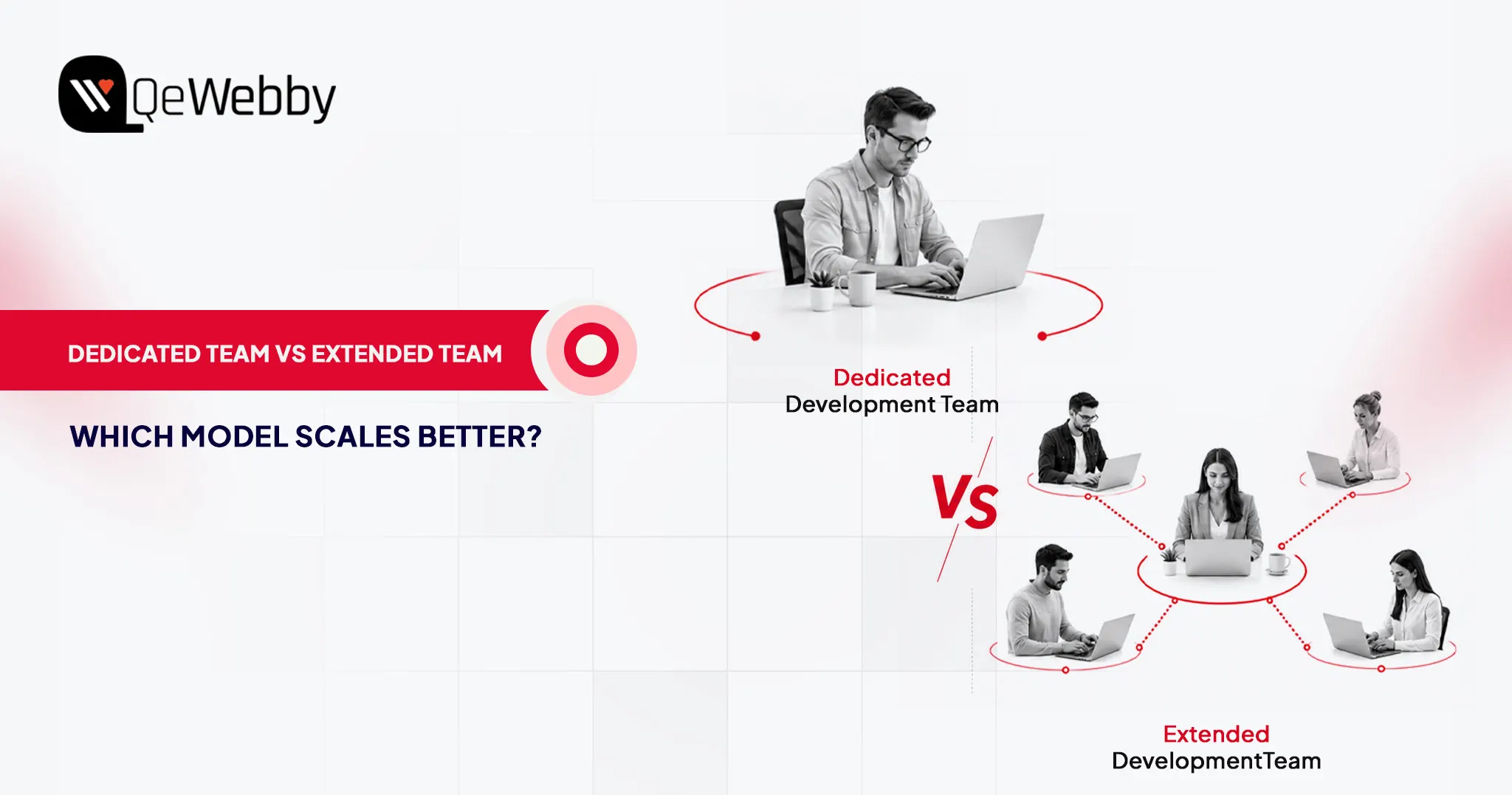
Our comparison of dedicated vs extended team WordPress breaks down which structure fits which stage of growth, and pairs with any new build.

6 Tech Skills Entrepreneurs Must Have to Succeed

Business today operates in a state of constant change. Markets are more volatile, customer expectations shift rapidly, and new technologies continue to redefine how companies compete and grow. Relying solely on traditional business instincts is no longer enough success increasingly depends on how well you understand and apply technology.

Every business today, regardless of size or industry, runs on a combination of digital tools, platforms, and systems. You don’t need to be deeply technical, but you do need the awareness to identify the right technologies and the judgment to use them effectively. When leveraged correctly, technology simplifies operations, uncovers growth opportunities, and accelerates decision-making.

Founders who fail to adapt technology risk falling behind in a landscape where speed, efficiency, and data-driven execution define success. Strong skills of entrepreneurs now include the ability to evaluate evolving solutions, integrate systems seamlessly, and stay aligned with ongoing digital advancements.

With an overwhelming number of entrepreneur tech tools available for every business function, the real differentiator lies in knowing what to use, when to use it, and how to extract value from it.

Why Tech Skills Are Important for Entrepreneurs in 2026

According to report, global digital transformation spending is expected to exceed $3.4 trillion, highlighting how critical technology adoption has become for modern businesses.

Entrepreneurship today is about execution in a fast, unpredictable, and technology-driven environment. Markets shift quickly, customer behavior evolves overnight, and new competitors can emerge with scalable digital models at any moment.

This is exactly why technology skills for entrepreneurs have become a core business requirement. They help founders move faster, make smarter decisions, and stay aligned with how modern businesses actually operate.

Here’s why these skills matter more than ever:

  • Navigate market volatility with confidence: Rapid changes demand real-time insights. Tech skills help you track trends, adapt strategies, and respond before opportunities disappear.
  • Stay competitive in a crowded digital-first landscape: Businesses today compete on speed, experience, and efficiency. Strong skills of entrepreneurs ensure you can match and outperform digitally mature competitors.
  • Leverage AI and automation for smarter operations: From predictive analytics to workflow automation, AI is transforming how businesses function. Understanding how to apply it gives you a measurable edge.
  • Make data-driven decisions instead of guesswork: Access to data is easy; interpreting it is not. Tech literacy allows you to turn raw data into actionable insights that drive growth.
  • Maximize the value of modern tools and platforms: There’s no shortage of entrepreneur tech tools, but without the right knowledge, they become underutilized investments rather than growth enablers.
  • Scale efficiently without operational bottlenecks: Technology enables automation, integration, and streamlined workflows, these are key factors in scaling without increasing complexity.
  • Adapt quickly to continuous innovation: New technologies emerge constantly. Entrepreneurs who stay updated can identify opportunities early and implement them effectively.

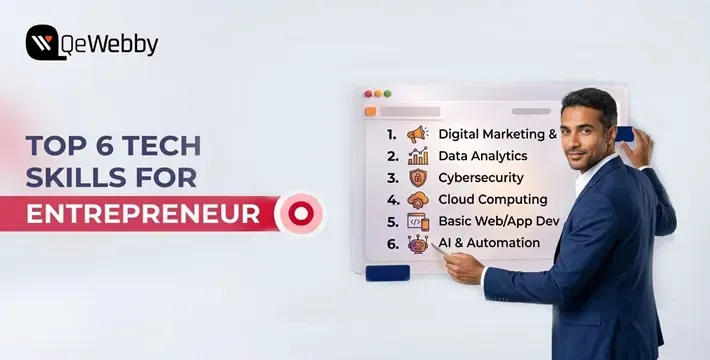
Top 6 Tech Skills Every Entrepreneur Needs in 2026

The most impactful technology skills for entrepreneurs go beyond basic understanding; they enable smarter decisions, faster growth, and sustainable scalability.

Here are six essential skills of entrepreneurs that can truly be game changers, especially when powered by the right entrepreneur tech tools.

#1. Digital Marketing & SEO

Digital visibility is the backbone of modern growth, especially when supported by a strong website foundation built using professional WordPress development services that ensure performance, scalability, and SEO readiness.

Entrepreneurs who can analyze traffic patterns, optimize funnels, and refine campaigns based on data create predictable acquisition systems. To better understand how a strong website contributes to this, you can explore this WordPress website development guide.

How it can be a game changer?

You gain control over your customer acquisition channels, reduce dependency on third parties, and build a consistent pipeline of qualified leads.

Why this skill is important?

Among the most revenue-driven skills of entrepreneurs, this ensures you extract maximum value from entrepreneur tech tools while strengthening your overall technology skills for entrepreneurs.

#2. Sales and Networking Skills

Sales today is deeply integrated with technology. It involves understanding CRM platforms, managing pipelines, tracking lead journeys, and using automation for follow-ups. Networking has also evolved into a hybrid model, combining digital outreach, social platforms, and data-driven personalization. Entrepreneurs who can leverage insights to tailor communication and build relationships at scale create stronger conversion opportunities.

How it can be a game changer?

The ability to combine digital outreach with personal engagement accelerates trust-building and shortens the sales cycle.

Why this skill is important?

Modern skills of entrepreneurs include leveraging CRM and outreach platforms. When aligned with technology skills for entrepreneurs, these entrepreneur tech tools significantly amplify business growth.

#3. Basic Coding & Graphic Designs

Having foundational knowledge of coding and design empowers entrepreneurs to move faster and communicate better with technical teams. This includes understanding HTML/CSS basics, UI/UX principles, and visual hierarchy. Businesses that want to scale faster often complement this with UI/UX design and development services to create better user experiences and improve engagement.

It allows quick prototyping, minor website updates, and better decision-making when working with developers or designers. If you’re comparing development approaches, this custom WordPress vs page builders guide can help clarify the right direction. Instead of being fully dependent, entrepreneurs can validate ideas, test interfaces, and iterate quickly, reducing turnaround time and improving execution efficiency.

How it can be a game changer?

It enables faster experimentation, better collaboration with teams, and quicker implementation of ideas.

Why this skill is important?

These practical technology skills for entrepreneurs help you use entrepreneur tech tools more effectively while enhancing your overall skills of entrepreneurs.

#4. Cybersecurity Awareness

As businesses rely more on digital systems, cybersecurity becomes critical. This skill involves understanding data protection practices, secure authentication, threat detection, and compliance requirements.

Entrepreneurs must recognize vulnerabilities, implement basic safeguards, and ensure systems are protected against breaches. Implementing WordPress security services can further strengthen protection against evolving threats.

It also includes awareness to common risks in modern digitized operations such as phishing, ransomware, data leaks, and others.

How it can be a game changer?

Strong security practices prevent disruptions, protect sensitive data, and build long-term credibility.

Why this skill is important?

Cybersecurity is a core part of technology skills for entrepreneurs. Without it, even advanced entrepreneur tech tools can become liabilities, making it one of the essential skills of entrepreneurs.

#5. Cloud Computing & Remote Collaboration

Cloud computing enables businesses to operate with flexibility and scale without heavy infrastructure. This skill includes understanding cloud platforms, storage systems, SaaS tools, and real-time collaboration environments. Entrepreneurs can manage distributed teams, access data from anywhere, and ensure seamless communication across locations.

How it can be a game changer?

It allows businesses to scale efficiently, collaborate in real time, and operate without geographical constraints.

Why this skill is important?

Understanding cloud ecosystems is among key technology skills for entrepreneurs. It ensures effective use of entrepreneur tech tools while strengthening the adaptability of skills of entrepreneurs.

#6. AI Tools & Automation Platforms

A report by McKinsey & Company shows that companies using AI-driven automation can increase productivity by up to 40%, making AI one of the most impactful technology skills for entrepreneurs.

AI and automation are transforming how businesses operate. This skill involves understanding how to use AI for data analysis, customer insights, personalization, and predictive decision-making.

Automation tools streamline repetitive tasks like marketing workflows, customer support, and reporting. To further improve performance and decision-making, businesses can also explore AI A/B testing tools for WordPress for data-driven optimization.

Entrepreneurs who can identify where automation fits into their processes reduce operational load while increasing efficiency and accuracy, creating a scalable foundation for growth.

How it can be a game changer?

Automation boosts productivity, while AI enhances decision-making and operational efficiency.

Why this skill is important?

Adopting AI is a defining factor in modern skills of entrepreneurs. When combined with entrepreneur tech tools, it strengthens your technology skills for entrepreneurs and drives competitive advantage.

Strong technology skills for entrepreneurs become even more powerful when supported by the right execution partner. Whether it’s digital marketing, web development, or scalable software solutions, aligning technology with business goals ensures long-term growth and efficiency.

How to Develop and Improve These Tech Skills?

The smartest entrepreneurs focus on consistent, practical learning and apply it directly to their business. That’s how technology skills for entrepreneurs turn into real competitive advantage.

Here’s how you can systematically develop and sharpen these skills of entrepreneurs:

  • Start with problem-first learning: Don’t chase trends. Identify gaps in your business, it could be marketing, operations, or sales, and learn the tech that solves those specific problems.
  • Adopt a “learn by doing” approach: Theory won’t scale your business. Use entrepreneur tech tools hands on by setting up campaigns, automating workflows, analyzing dashboards, and experimenting in real scenarios.
  • Invest in structured learning: Take focused courses, certifications, or workshops that align with your business goals. This accelerates your understanding of key technology skills for entrepreneurs without wasting time.
  • Build a minimum viable tech stack: Start small. Select a few essential entrepreneur tech tools and learn them deeply instead of spreading yourself too thin across multiple platforms.
  • Follow industry trends and updates: Stay updated with AI advancements, automation tools, and emerging platforms to continuously upgrade your skills of entrepreneurs.
  • Collaborate with experts and teams: Work closely with developers, marketers, and analysts. This helps you learn faster and understand how different technologies work together in real business environments.
  • Analyze, optimize, repeat: Track results from every tool or system you implement. Continuous improvement is what strengthens technology skills for entrepreneurs over time.
  • Dedicate time for continuous learning: Set aside regular time each week to explore new tools, features, or strategies. Consistency compounds your growth faster than occasional learning.

The goal is to become a tech-enabled entrepreneur who knows how to leverage the right tools at the right time. That’s what transforms effort into scalable success.

When Should Entrepreneurs Invest in Technology Solutions?

As businesses grow, managing tools, automation, and integrations becomes complex. This is where entrepreneurs often need expert support.

Businesses should consider professional help when they need:

  • Scalable digital infrastructure
  • Advanced automation workflows
  • SEO-driven growth strategies
  • Custom software or platform development
  • Integration between multiple business systems

Working with the right technology partner ensures that your systems are not only functional but also optimized for long-term growth.

Conclusion

Technology is becoming the foundation of how resilient and future-ready businesses are built. Entrepreneurs who embrace this shift don’t just adapt to change; they create systems that absorb disruption and turn it into opportunity. That’s the real advantage, building a business that doesn’t just perform today but evolves continuously with the market.

This is where having the right technology partner matters. Working with a team that offers white-label WordPress development services can help agencies and businesses scale faster without increasing internal workload.

QeWebby brings deep expertise in building scalable, integrated digital solutions tailored to evolving business needs. With a strong focus on performance, usability, and innovation, we help translate technology into tangible outcomes.

If you’re ready to align your business with the evolving market requirements, contact us to get started.

How Top Agencies Deliver More with White-Label WordPress Development

Most agencies struggle at scale due to resource limitations. White-label WordPress development services can help agencies scale without spreading their resources too thin. However, finding the right white-label WordPress development agency can be a complex process.

Agencies need to evaluate development, WordPress customization, and SEO expertise. However, there are many additional aspects that an agency needs to consider before selecting a white-label WordPress development service. With 43.3% of websites on the internet now using WordPress, the demand for development expertise is also higher.

This is why many agencies face questions like

  • Does investing in a white-label development service make sense?
  • What are the tasks an agency can outsource?
  • How does it impact SEO?
  • Is outsourcing the only answer to cost reduction and scalability?

In this article, you will get a comprehensive guide on why you need a white-label WordPress development agency for your projects, its benefits, and tasks that can be outsourced. So, let’s get started.

What are White Label WordPress Development Services?

White-label WordPress development services help agencies in building WordPress websites, plugins, and applications. Agencies can rebrand websites as their own. Such a partnership allows agencies to scale their services and easily expand offerings without hiring in-house staff.

What Makes White Label WordPress Unique?

White-label WordPress development offers flexibility for agencies. It ensures a custom-branded solution for agencies through outsourced development. This makes sure agencies reduce costs, simplify branding, and offer tailored solutions.

Brand Consistency Without Technical Overhead

White-label WordPress development services enable companies to deliver professional websites, ensuring consistent branding and a seamless user experience. This is particularly important if you want to ensure consistency across devices and screens.

Especially when64.2% of total traffic comes from mobile devices, it is essential to ensure branding consistency. Agencies can outsource the technical work to specialized developers and offer sites that can be rebranded for clients.

Cost-Effectiveness and Resource Optimization

Such services reduce the need for hiring in-house resources, training, and managing development teams. Due to outsourcing, the development cost has been reduced. Additionally, the time required to build websites for clients decreases, ensuring faster delivery.

Enhanced Service Portfolio and Expertise Access

Companies can easily access specialized WordPress developers and experts. It also helps create custom themes, develop plugins, provide WooCommerce solutions, and optimize performance. WordPress outsourcing service providers employ SEO best practices, security protocols, and strategies for the site. This helps agencies ensure their clients’ visibility is higher.

While the above aspects do make white-label WordPress development unique, the real question is how it fares against the standard development approach.

The Difference Between White Label and Standard WordPress Development

Here are some key differences between white-label and standard WordPress development approaches.

Aspect White Label WordPress Development Standard WordPress Development
Ownership Client owns the final product; development team remains invisible to the end customer Direct relationship between client and development team; complete transparency of providers
Branding Developed under your brand name, the third-party provider remains anonymous Development team’s branding may be visible; direct attribution to developers
Cost Structure Lower upfront costs; eliminates hiring and training expenses Higher initial investment; includes whole team setup and resource allocation
Project Timeline Faster turnaround due to specialized, ready-to-deploy teams Longer development cycles include team assembly and project planning phases
Customization Level Limited customization focuses on rebranding existing solutions Full customization capabilities; complete control over features and functionality
Scalability Highly scalable, easy to scale up/down based on project demands Requires significant resource planning; scaling involves hiring and team management
Quality Control Dependent on the provider’s standards, less direct oversight Direct quality control, complete management of development standards and processes
Communication Indirect communication through a white label provider Direct communication with the development team, immediate feedback loops
Project Complexity Best suited for standard features and simple-to-moderate projects Ideal for complex, highly customized solutions requiring unique features
Resource Management No need for internal resource management; the provider handles team allocation Full responsibility for team management, resource allocation, and coordination

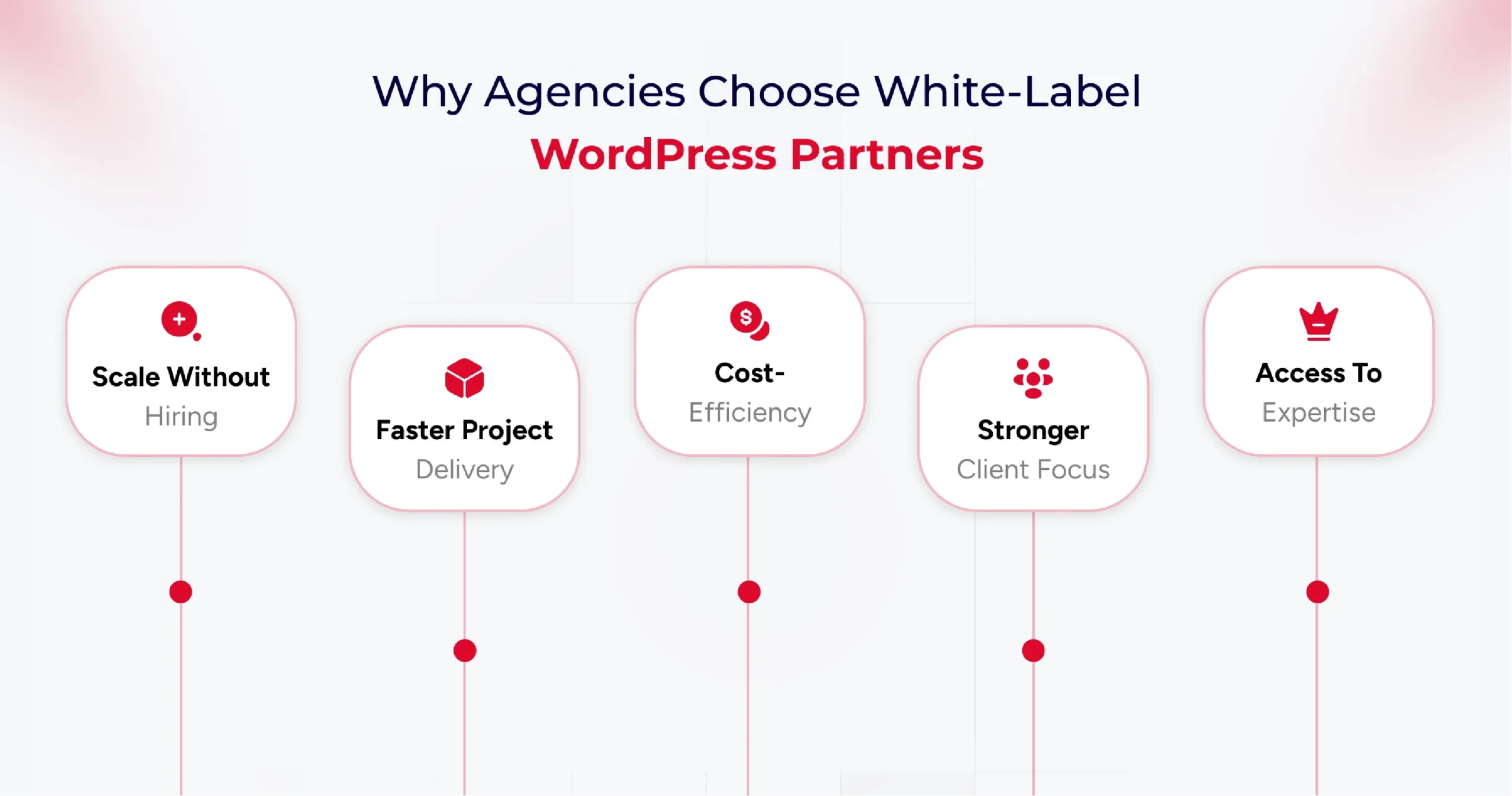
Why Top Agencies Use White-Label WordPress Partners?

Agencies often adopt white-label partnerships to get the perfect blend of strategic and practical benefits. It enables agencies to scale their services without incurring significant expenses on hiring in-house teams, focus on their core strengths, and ensure better delivery.

Here are some key reasons agencies use white-label WordPress partners,

1. Scalability without Hiring

White-label WordPress development services provide access to professionals who help agencies complete projects efficiently and deliver high-quality output. The best part is that agencies don’t need to hire these talented professionals in-house. So the cost of hiring, training, and managing talent is borne by the white-label WordPress development agency.

2. Faster Project Delivery

Partnering with a White-label WordPress agency ensures faster project delivery for top agencies and brands. With a team of dedicated experts, white-label service providers provide you with complete flexibility to add or reduce resources as per project needs.

3. Cost-Efficiency

Reduced hiring costs are just one of the many cost efficiency benefits of partnering with WordPress outsourcing services. As an agency, you can reduce the cost of development, content creation, SEO, and CMS management with this partnership.

4. Focus on Strategy and Client Relationships

Offering a finished product under the agency’s own brand creates a consistent and professional client experience. This partnership enables you to maintain smoother client relationships and ensure your team focuses on strategic tasks rather than development ones.

5. Access to Specialized Skills

Finding the right talent for your agency can be complex in a crowded market. Plus, if you need a specialized talent, hiring, onboarding, and ensuring the timely delivery of projects can be overwhelming. Partnering with a white-label development agency, you get access to specialized talents without the hassle of hiring them in-house.

Knowing the benefits of outsourcing to a white-label development agency leads to another crucial question: “What to outsource?” Yes, prioritizing specific tasks and operations for outsourcing is key to successful project delivery.

Top Tasks to Outsource Through White Label WordPress Providers

White-label WordPress providers ensure a range of services that you can outsource. But strategically planning the prioritization of tasks becomes essential. Here are some tasks that you can outsource to a WordPress development agency.

Custom WordPress Website Creation

As an agency, you can outsource the design and development of unique WordPress themes specific to your branding needs. It can help you customize a WordPress website for your clients based on their particular needs.

Plus, you can outsource custom plugin development to add unique functionalities and features to the website. And if you are looking to cater to an e-commerce brand, consider outsourcing WooCommerce development to a WordPress development agency.

You can also outsource website migration tasks, which allows you to seamlessly move the existing resources to newer WordPress versions or environments.

Ongoing Website Maintenance and Support

A key task to outsource is website maintenance. You can ensure higher website uptime by outsourcing the maintenance activities to a white-label development agency. These service providers continuously monitor your website and optimize it for performance based on analytics.

Using such services also ensures daily backups of your website. So, your site is always ready for recovery, even in the event of an incident. Plus, you get complete end-to-end technical support from a white-label development service provider.

SEO Implementation and Optimization

One of the most essential activities to outsource is search engine optimization. As an agency, you need to ensure maximum visibility for clients to ensure higher conversions. Plus, 53% of mobile visitors abandon pages, that take longer than 3 seconds to load. This makes outsourcing performance optimization to specialists crucial for your brand. A white-label WordPress development service helps you optimize SEO and provide better visibility.

  • SEO strategy development tailored to your client’s brand and target audience.
  • Identify related keywords, ensure better AIO and GEO strategies.
  • Optimize the website content, meta descriptions, titles, and images for search engines.
  • Address technical aspects of a website to ensure a better site structure, improved crawlability, and enhanced mobile-friendliness.
  • Implement link-building strategies to acquire high-quality backlinks from reputable websites with a high domain authority.
  • Create a content strategy and develop SEO-friendly resources that can offer the target audience better value.

Now that you know what tasks you need to outsource, understanding the impact and benefits of partnering with a white-label WordPress development agency becomes crucial.

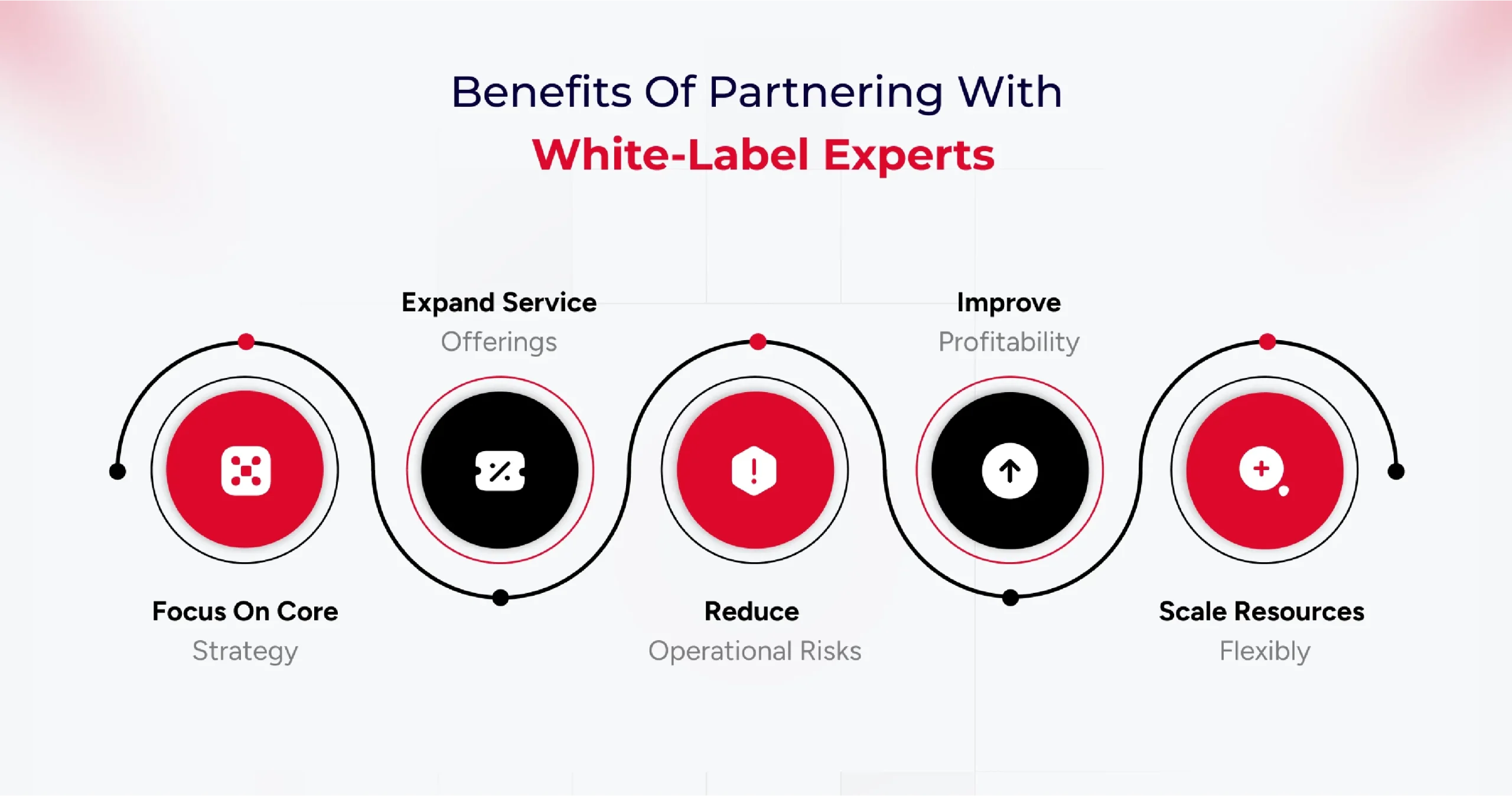
Benefits of Partnering with White-Label WordPress Experts

Partnering with a white-label WordPress development agency, you can get many strategic advantages. From access to specialized talent to reduced hiring overhead and faster project deliveries, the benefits are numerous. Understanding these benefits is crucial in making informed decisions about whether to partner with a WordPress outsourcing agency.

Some of the key benefits of partnering with a white-label development agency are,

  • Higher Focus on Core Competencies – Such services allow your team to focus on client relationships, strategy, and business development.
  • Service Offering Expansion – You can partner with a white-label development agency to easily scale your business offerings.
  • Risk Mitigation – Partnering with a white-label agency ensures a single point of contact for the client, providing a seamless experience. It offers better client loyalty and brand ownership.
  • Higher Profitability – With this partnership, your agency can handle more clients and increase its profitability through reduced operational costs.
  • Better Cost Efficiency – The reduced cost of recruitment, training, salaries, employee insurance, and other resources makes this partnership cost-efficient.
  • Faster Time-to-Market – Experienced teams and experts from a WordPress development agency help you deliver client projects faster. It enables you to launch a new service and meet deadlines quickly.
  • Better Flexibility & Scalability – Scaling your agency services becomes easier by partnering with a WordPress outsourcing service. Plus, you get better flexibility in adding resources as per project requirements.

A significant benefit of a white-label WordPress development service is lower cost. However, freelance developers can also help reduce the cost of development. This is why understanding the difference between freelance and white-label development becomes vital.

White-Label WordPress vs Freelance Developers (Comparison Table)

Here are some key differences between freelance and white-label development,

Criteria White-Label WordPress Design & Development Team Freelance WordPress Developer
Team Composition Multi-skilled team covering development, design, SEO, project management, and ongoing support Solo expert focuses on their core skills, may specialize in a niche
Scalability Highly scalable, can handle multiple projects and increased workloads efficiently Limited capacity is restricted by individual bandwidth and availability
Backend Support for Agencies Robust WordPress backend support; acts as a silent, invisible partner behind agency branding with long-term updates, troubleshooting, and security Often limited to core development, ongoing WordPress support depends on the freelance arrangeme
Branding Opportunities Enables agencies to offer white-label, branded services; clients see only agency brand Works under their own name; agency branding requires a special arrangement
Expertise Coverage Comprehensive covers design, speed optimization, plugin/theme customization, hosting, security, and maintenance Variable—may be deep in specific areas (e.g., WooCommerce, custom plugins), but broad coverage is often lacking
Cost Structure Higher upfront cost, but billed per actual work delivered; better cost efficiency for ongoing and larger projects Budget-friendly for small projects, flexible payment, and often lower overall costs
Project Management Dedicated account/project managers streamline workflow, communication, and deadlines Direct communication and feedback; management handled personally by the freelancer
Support & Maintenance Ongoing reliable WordPress backend support for agencies; regular updates, security, and fixes Support may be limited; post-project support depends on the freelancer’s availability and preferences
Availability Consistent—team approach ensures resources are deployed as needed Variable; freelancers may juggle multiple projects at once, affecting responsiveness
Delivery Consistency Quality assured with standardized workflows and quality checks Personalized service but variable consistency; may lack process rigor
Flexibility Can rapidly shift resources between projects as agency needs change; offers agency-focused customization. Maximum flexibility in hours and approach, direct negotiation possible

How to Choose the Right White-Label WordPress Partner

Identify your agency’s specific needs, such as full website development, plugin customization, backend support, or ongoing maintenance, before beginning your search. The ideal partner should offer in-depth WordPress expertise, align with your service requirements, and have a proven track record of delivery in similar agency models.

Essential Qualities to Look For in a Partner

  • Technical Expertise: Seek partners with a specialized team, proficiency in WordPress technologies (PHP, JavaScript, HTML, CSS), and proven experience in custom themes, plugins, performance optimization, and secure backend setups.
  • Quality Assurance: Look for robust testing processes, quality control, and attention to SEO, speed, and user experience in delivered projects.
  • White-Label Branding: The partner should work entirely behind your agency’s brand, never revealing their identity to end clients, and seamlessly adopting your branding elements.
  • Scalability & Consistency: A reliable team should scale with your project demands and provide standardized quality, regardless of order volume or complexity.
  • Communication & Support: Prioritize clear communication channels, timely responses, and dedicated support contacts. Regular updates, milestone tracking, and responsive problem-solving are vital.
  • Security and Confidentiality: Insist on NDAs and evidence of strong data protection measures, such as encryption protocols and internal security policies.
  • Ethics & Client Relationship: The partner should demonstrate transparency, intellectual property protection, and a commitment to long-term collaborative success.

Reviewing Past Work and Client Testimonials

Request portfolios, live website samples, and detailed case studies. Authentic client testimonials and reviews offer valuable insights into reliability, strengths, and real-world performance.

Quality, diversity, and relevance of past work indicate the partner’s capability to meet your agency’s standards and niche needs.

Service Agreement Factors You Should Know

Review the contract thoroughly, focusing on:

  • Project scope and deliverables
  • Timelines and benchmarks
  • Payment terms and pricing structures
  • Flexibility to tailor services
  • Post-launch support and maintenance commitments
  • Intellectual property ownership and confidentiality clauses

Clarify all terms to avoid hidden costs or misunderstandings. An explicit agreement ensures accountability and smooth execution.

Checklist for Agency Owners

Here is a checklist that you can follow as an agency owner while selecting the right white-label WordPress development service.

  • Define the exact services required for your agency’s workflow.
  • Assess the technical proficiency and WordPress specialization of the partner.
  • Review portfolios, case studies, and client testimonials for validation.
  • Confirm the partner’s experience in white-label branding and backend agency support.
  • Evaluate communication style, clarity, and responsiveness.
  • Verify security practices and willingness to sign NDAs.
  • Inspect their process for quality assurance and timely delivery.
  • Ensure flexibility in services and cost structures suited to agency budgets.
  • Clarify post-project support and troubleshooting commitments.
  • Audit for alignment in values, ethics, and collaborative approach.

Conclusion

In a fast-moving digital market, being slow is not an option for your agency. This is where a white-label development agency comes into play. It helps your agency deliver projects faster, customize the website as per branding needs, and ensure better profitability.

The key, however, lies in choosing the right partner. Agencies must carefully evaluate technical expertise, SEO know-how, communication practices, scalability, and security standards before committing. A strong partnership can empower agencies to focus on strategy, strengthen client relationships, and maintain brand ownership, all while delivering high-performing websites that meet their clients’ needs.

Ultimately, white-label WordPress development is not just about cost savings; it’s about getting higher flexibility, ensuring faster delivery, and building a sustainable growth model for agencies. By outsourcing the right tasks to the right partner, agencies can stay agile, competitive, and ready to deliver more value in an ever-evolving digital market.

How to Hire a Dedicated WordPress Development Team for Enterprises?

Did you know 60% of enterprises struggle to scale their WordPress websites due to a lack of specialized teams? If your business is growing fast, relying on scattered freelancers or overstretched IT staff may cost you time, money, and missed opportunities.

Enterprise websites demand more than just a digital presence they require enterprise WordPress development solutions that can handle scale, performance, and security. Yet many organizations still stretch their in-house IT teams thin or juggle scattered freelancers, leading to inefficiencies and missed opportunities.

According to Gartner, it projects that by 2026, 65% of enterprises will rely on third-party development partners for digital transformation. These stats highlight a growing reality: more businesses are turning to a dedicated WordPress development team often offshore, to manage projects end-to-end.

Whether you’re overhauling an outdated site, launching a customer portal, or integrating enterprise-grade systems, the right partner can transform your website into a scalable, revenue-driving asset.

Why Hiring a WordPress Development Team Is a Smart Enterprise Move

Digital expectations are at an all-time high. Enterprises can no longer rely on generic website solutions or patchwork freelancers. What they need is a dedicated WordPress development team for large-scale projects, one that can think strategically, execute precisely, and evolve continuously with the business.

Here’s why this move makes business sense:

1. Tailored Solutions for Complex Enterprise Needs

Decision-makers often land on your site with a specific intent—looking for answers, confidence, or a sign you “get it.” Good UX doesn’t just help them find what they need—it reassures them they’re in the right place.

  • Custom feature development to support unique workflows.
  • Enterprise-grade architecture designed for scalability and security.
  • Seamless third-party system integrations (CRM, ERP, APIs).

An experienced enterprise WordPress development solutions provider ensures your website is built for complexity without sacrificing usability.

2. Faster Time-to-Market

Speed matters especially when launching new services or rolling out updates.

  • A dedicated team works with streamlined processes and clear priorities.
  • Offshore teams enable 24/7 development cycles, reducing delivery timelines.
  • Task distribution across specialists (frontend, backend, QA, DevOps) accelerates execution.

This means quicker iterations, faster launches, and the ability to pivot with market changes.

3. Cost-Efficient Without Compromising Quality

Hiring senior in-house developers is costly and time-intensive. Offshore teams, by contrast, offer:

  • Competitive pricing with enterprise-level quality.
  • Savings on recruitment, onboarding, and infrastructure.
  • Flexible models (hourly, project-based, full-time) for budget control.

According to Deloitte, 70% of enterprises outsource software development to cut costs and boost efficiency and WordPress is no exception.

4. Access to Specialized Global Talent

When you hire an offshore WordPress development team for enterprises, you’re not limited by location. You gain:

  • Access to global WordPress specialists with cross-industry expertise.
  • Teams that stay updated with certifications and evolving best practices.
  • The right person for each role, every time.

5. Ongoing Support and Maintenance

Enterprise websites can’t “set and forget.” They require constant attention:

  • Updates, bug fixes, and backups.
  • Real-time support with strict SLAs.
  • Security patching and performance audits.

A dedicated team ensures your site remains fast, stable, and secure 24/7 eliminating the stress of last-minute fixes.

6. Alignment with Business Goals

This alignment keeps your website in step with your enterprise strategy.

  • Learn your brand voice, goals, and customer journey.
  • Use agile sprints, reporting, and check-ins for transparency.
  • Build a partnership focused on outcomes, not just tasks.

A professional team doesn’t just code; it collaborates. They:

7. Freeing Up Internal Resources

Let your staff focus on strategy, sales, and innovation — while experts handle:

  • Backend logic and frontend UI/UX.
  • Performance optimization, SEO, and analytics.
  • Security and compliance.

This division of labor increases efficiency and minimizes risks.

Essential Skills For Choosing the Right WordPress Development Team

Hiring a team isn’t just about coding knowledge. The best dedicated WordPress developers for large-scale projects combine technical expertise with soft skills that ensure long-term success.

Technical Skills: The Backbone of Your Website

The technical skills a WordPress development team brings to the table are non-negotiable, especially when you’re building an enterprise-grade website. These skills ensure your website runs smoothly, integrates seamlessly with other systems, and delivers an optimized user experience.

Custom Theme & Plugin Development

WordPress is incredibly flexible, but to unlock its full potential, you need developers who can build custom themes and plugins that meet your specific needs.

  • Custom Themes: If you need a unique design that matches your brand, a skilled team can create a custom theme from scratch. This means you’ll stand out from the thousands of other WordPress websites with off-the-shelf themes.
  • Custom Plugins: A good team will be able to build plugins tailored specifically for your business functions, whether it’s an advanced form, payment gateway integration, or special functionality you can’t find in existing plugins.

Custom development is vital to ensuring your site is future-proof, scalable, and capable of growing with your business needs.

REST API and Third-Party Integrations

Today’s WordPress websites are rarely standalone. They need to integrate with other tools, platforms, and services, from CRMs to marketing automation tools. The ability to work with REST APIs and integrate third-party services seamlessly is crucial.

An experienced WordPress development team should be able to connect your site to external APIs, such as social media platforms, payment gateways, and CRM systems.

They should also be adept at using RESTful APIs to allow for smoother, more efficient communication between your site and other services, resulting in faster load times and more powerful features.

Performance Optimization & SEO

A fast, high-performing website is essential for user experience and search engine rankings. Your WordPress development team should have a strong grasp of:

  • Performance optimization: From image compression and caching strategies to optimizing database queries and reducing server load, a good team knows how to make your site fast — no matter how much traffic you get.
  • SEO best practices: While SEO experts focus on content, your WordPress development team plays a big role in making sure the website is built with search engine rankings in mind. This includes ensuring proper site structure, fast load times, clean code, and accessibility.

These technical capabilities ensure that your site isn’t just functional but also visible and high-performing.

Security Best Practices

Security should never be an afterthought, especially when dealing with enterprise data and user information. A WordPress development team should be well-versed in security best practices:

  • SSL certifications, firewall configurations, and user access control.
  • They should be proactive in ensuring your site is protected from hacking attempts, malware, and potential vulnerabilities, and they should conduct regular security audits.
  • They must also stay up-to-date with the latest WordPress security protocols, which can evolve quickly.

In an era of data breaches and cyberattacks, you can’t afford to compromise on security.

Soft Skills: Where Collaboration Meets Innovation

While technical know-how is critical, soft skills are what transform a good WordPress development team into a great one. These are the traits that help teams collaborate, solve problems, and adapt to your evolving business needs.

Communication and Collaboration

Clear communication is key to the success of any development project, particularly when you’re working with remote or offshore teams. Your WordPress development team should be:

  • Responsive and transparent, keeping you in the loop about progress, challenges, and milestones.
  • Collaborative, willing to work with your internal teams, designers, and content creators to ensure your vision comes to life seamlessly.
  • Able to explain technical concepts in plain language, so you always understand what’s going on with your website, even if you’re not a tech expert.

Without strong communication, even the most skilled developers can miss the mark, leading to frustration, delays, and budget overruns.

Problem-solving and Innovation

Development is rarely a straight path. Problems and challenges will inevitably arise. You need a team that’s not only capable of solving problems but also innovative enough to come up with creative solutions.

  • The best WordPress teams are solution-oriented, willing to dig deep and find fixes that others might overlook.
  • They should have experience troubleshooting complex issues, whether that’s fixing site slowdowns, resolving conflicts between plugins, or troubleshooting complex integrations.
  • Beyond problem-solving, they should also bring a spirit of innovation, suggesting ways to improve your site’s functionality, design, or user experience that you hadn’t considered.

In the fast-paced digital world, innovation is a key driver of business success, and your WordPress team should be ready to contribute ideas that take your website to the next level.

Time Management

When it comes to development, time is of the essence — especially when there are multiple stakeholders and tight deadlines. Your WordPress development team should be skilled in:

  • Prioritizing tasks based on business needs and project timelines.
  • Managing resources to ensure work is being done efficiently without unnecessary delays.
  • Meeting deadlines and providing regular updates on progress.

Time management isn’t just about meeting deadlines; it’s about maximizing productivity and delivering results on time — without sacrificing quality.

Experience with Enterprise-Grade Solutions

Finally, you want a team that has experience working with enterprise-grade WordPress solutions. This means they’re familiar with:

  • Handling large-scale websites with thousands (or millions) of visitors, high data traffic, and complex workflows.
  • Integrating enterprise-level tools like ERP systems, CRM software, and other third-party business solutions.
  • Ensuring that your WordPress site is not only scalable but also maintainable as it grows over time.

Their experience in working with large-scale projects will help them anticipate challenges and set up your site for success well into the future.

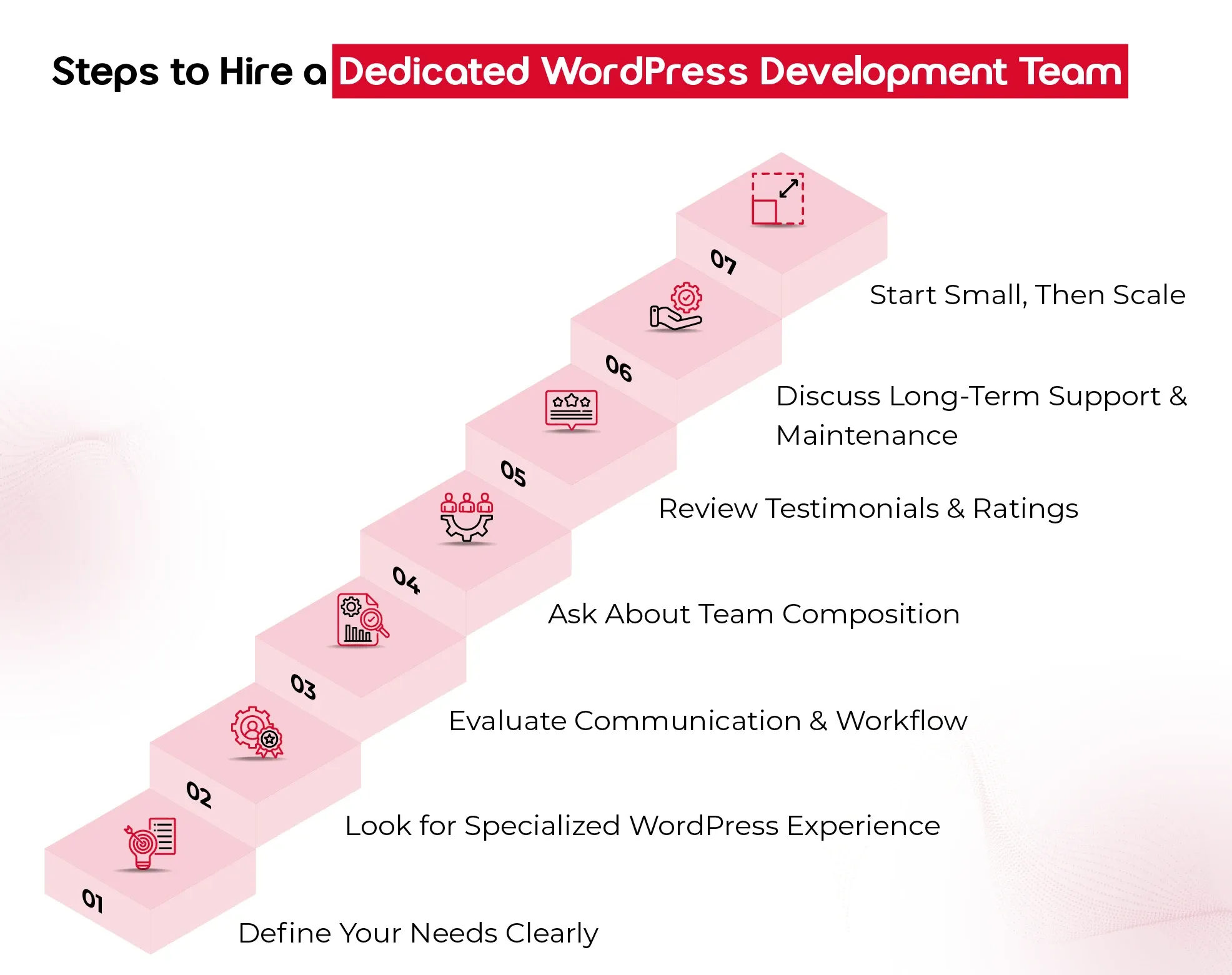
7 Easy Steps to Hire a Dedicated WordPress Development Team

Hiring the right WordPress development team can feel like a big decision and it is. Your website isn’t just a digital storefront; it’s the engine powering customer experiences, driving conversions, and reflecting your brand at every click. So, choosing the right team to build, scale, and support it is worth getting right. Here are the essential steps to help you make a smart, confident hiring decision.

1. Define Your Needs Clearly

Before you even start looking for a team, take a step back and ask: What do you need this team to do?
Are you:

  • Building a website from scratch?
  • Redesigning an existing platform?
  • Adding custom features or integrations?
  • Needing ongoing support and maintenance?

Documenting your goals, technical requirements, timeline, and budget upfront gives you clarity—and makes it easier for the team you hire to deliver the results you expect.

2. Look for Specialized WordPress Experience

Not all developers who “know WordPress” are the same. For enterprise-grade projects, you need a team that specializes in:

  • Custom WordPress development (not just tweaking themes)
  • Scalable architecture and database management
  • Performance optimization and security
  • API integrations with CRMs, ERPs, or marketing tools

Ask to see case studies or a portfolio that reflects similar work to your needs. The right team won’t just say “yes” they’ll ask thoughtful questions, spot risks, and bring proactive solutions.

3. Evaluate Communication & Workflow

A great development team doesn’t just build well — they communicate well. Pay attention to how they:

  • Respond during your initial inquiry
  • Handle your questions (Are they clear, honest, and transparent?)
  • Explain their development process and timelines

You want a team that’s structured, easy to reach, and keeps you in the loop throughout the project. Especially if you’re hiring an offshore WordPress development team, time zone compatibility, tools for collaboration (like Slack or Trello), and clear project documentation become extra important.

4. Ask About Team Composition

An experienced WordPress development team is more than just developers. Ideally, you’re getting:

  • A project manager to guide and coordinate
  • Front-end and back-end developers
  • Designers (if design is in scope)
  • QA testers ensure everything runs smoothly

Understanding who’s involved and what roles they play helps you assess whether the team can handle your scope effectively, especially for large or ongoing enterprise projects.

5. Review Testimonials and Ratings

What others say about them matters. Look for:

  • Verified reviews on platforms like Clutch
  • References from past clients (especially other enterprises)
  • Detailed testimonials that speak to delivery quality, communication, and problem-solving

If they have a 5/5 rating on Clutch, that’s a great sign — but always dig deeper. Strong reviews should reflect more than surface-level praise.

6. Discuss Long-Term Support and Maintenance

Building the site is just one part of the journey. Make sure your potential team offers:

  • Post-launch support
  • Bug fixes
  • Regular updates and security monitoring
  • Scalability planning as your business grows

Your WordPress site should evolve with you, so choose a team that’s in it for the long haul, not just the build phase.

7. Start Small, Then Scale

If you’re unsure, start with a smaller engagement, like a test project, performance audit, or a single feature build. This gives you a real-world look at how the team works before committing to a larger, long-term contract.

Final Thought

In today’s digital-first landscape, a website isn’t just a marketing tool; it’s the backbone of customer experience and enterprise growth. Partnering with an offshore WordPress development team for enterprises gives you the best of both worlds: cost efficiency and access to specialized global talent. From custom architecture to long-term support, a skilled team ensures your website scales as your business grows.

At QeWebby, our dedicated WordPress developers for large-scale projects combine technical excellence with enterprise-level strategy. With a proven 5/5 Clutch rating and experience across industries, we help enterprises build, scale, and secure WordPress websites that drive measurable results.

Beyond Contracts: 9 Strategies that Strengthen Agency-Client Relationship

A strong agency-client relationship serves as the cornerstone of successful collaborations in the business world. This partnership is vital across various industries, including marketing, advertising, public relations, and consulting, among others. By investing in nurturing and maintaining these relationships, both agencies, and clients can unlock new opportunities, achieve their objectives, and thrive in an increasingly competitive marketplace.

Let’s examine these key strategies!

9 Strategies that Strengthen Agency-Client Relationships

The cornerstones for nurturing robust agency-client relationships are effective communication, transparency, and reliability. These pillars form the foundation for collaboration, innovation, and mutual success between agencies and clients. And for that reason, we categorize our 9 strategies as

  • Communicating to Connect and Convey:
    1. Prioritize understanding and aligning with the client’s needs.
    2. Foster an environment that encourages new ideas.
    3. Acknowledge achievements together.
  • Embracing Transparency in Business:
    1. Maintain clear and open channels for trust and credibility.
    2. Establish a mechanism for ongoing improvement.
    3. Remain flexible and responsive to change.
  • Building Trust Through Reliability:
    1. Consistently deliver high-quality work to build trust.
    2. Nurture the partnership for continued growth.
    3. Blend agency and client creativity to generate innovative solutions.

1. Prioritize Understanding and Aligning with the Client’s Needs

Understanding and aligning with the client’s needs should be the cornerstone of any agency-client relationship. By taking the time to truly comprehend the client’s goals, challenges, and objectives, agencies can tailor their strategies and solutions to meet their specific requirements. Active listening, thorough research, and collaborative workshops are key to achieving this alignment. For example, an advertising agency working with a client launching a new product would conduct in-depth research into the target audience and market trends, ensuring that their campaign resonates with the client’s vision.

Pro Tip : Regularly revisit and reassess client needs throughout the project lifecycle to ensure ongoing alignment and relevance.

2. Foster an Environment that Encourages New Ideas

Fostering an environment that encourages new ideas is essential for driving innovation and creativity in agency-client relationships. Agencies should create a culture that values experimentation, rewards creativity, and celebrates out-of-the-box thinking. By providing opportunities for team members to share their ideas and perspectives, agencies can inspire fresh thinking and generate innovative solutions. For example, an advertising agency might hold regular brainstorming sessions where team members are encouraged to pitch unconventional ideas for upcoming campaigns.

Pro Tip : Create a safe space for team members to share ideas without fear of judgment, fostering a culture of innovation and creativity.

3. Acknowledge Achievements Together

Acknowledging achievements together is a powerful way to reinforce the positive aspects of the agency-client relationship. Agencies should celebrate project milestones, successes, and achievements with clients, recognizing the collective efforts that led to success. By sharing in the excitement of accomplishments, agencies can strengthen the bond with clients and foster a sense of partnership and camaraderie. For example, a branding agency might host a virtual launch event to celebrate the successful rebranding of a client’s company, inviting key stakeholders from both organizations to participate.

Pro Tip : Celebrate both big and small wins with enthusiasm and sincerity, reinforcing the value of collaboration and shared success.

4. Maintain Clear and Open Channels for Trust and Credibility

Clear and open communication is essential for building trust and credibility in agency-client relationships. Agencies should establish transparent communication channels, provide regular updates on project progress, and address any concerns or issues promptly. By maintaining transparency and honesty, agencies can demonstrate their commitment to the client’s success. For example, a digital marketing agency might use project management software to keep the client informed about campaign performance metrics and optimization efforts in real-time.

Pro Tip : Practice active listening and empathy to truly understand the client’s perspective and build stronger rapport.

5. Establish a Mechanism for Ongoing Improvement

Establishing a mechanism for ongoing improvement is critical for ensuring that agency-client relationships continue to evolve and grow over time. Agencies should solicit feedback from clients, conduct performance reviews, and implement action plans to address any areas for improvement. By continuously striving to enhance their services and processes, agencies can demonstrate their commitment to client satisfaction and success. For example, a PR agency might conduct quarterly reviews with clients to gather feedback on media outreach efforts and identify opportunities for refinement.

Pro Tip : Embrace feedback as a gift and use it as a catalyst for continuous learning and improvement within the agency.

6. Remain Flexible and Responsive to Change

Remaining flexible and responsive to change is essential for navigating the ups and downs of agency-client relationships. Agencies should be adaptable in their approach, willing to adjust strategies and tactics in response to changing client needs, market conditions, or external factors. By demonstrating flexibility and agility, agencies can show their clients that they are committed to finding solutions that meet their evolving requirements. For example, a social media marketing agency might pivot their campaign strategy in response to shifts in consumer behavior or market trends, ensuring that the client’s objectives are still met.

Pro Tip : Anticipate change and have contingency plans in place to quickly adapt and pivot when necessary.

7. Consistently Deliver High-Quality Work to Build Trust

Consistently delivering high-quality work is paramount for building trust with clients. Agencies should set clear expectations, adhere to deadlines, and strive for excellence in every project. By exceeding client expectations and consistently delivering results, agencies can establish themselves as reliable and trustworthy partners. For instance, a content marketing agency might conduct thorough research and quality checks to ensure that all content produced aligns with the client’s brand voice and objectives.

Pro Tip : Set internal quality standards and conduct regular quality assurance checks to ensure all deliverables meet or exceed client expectations.

8. Nurture the Partnership for Continued Growth

Nurturing the partnership for continued growth is essential for ensuring the long-term success and sustainability of agency-client relationships. Agencies should invest in building strong, personal connections with clients, demonstrating their dedication to mutual success. By regularly checking in with clients, offering strategic guidance, and identifying opportunities for expansion or additional services, agencies can foster a partnership that thrives over time. For example, a web development agency might provide ongoing support and maintenance services to help the client’s website evolve and grow alongside their business.

Pro Tip : Invest in building long-term relationships by regularly checking in with clients, providing strategic guidance, and offering value-added services that support their growth objectives.

9. Blend agency and client creativity to generate innovative solutions

Collaborating with clients to blend agency and client creativity can lead to the development of innovative solutions. By leveraging the unique perspectives and expertise of both parties, agencies can create campaigns, designs, and strategies that stand out in the market. Encouraging brainstorming sessions, soliciting input from the client’s team, and embracing a culture of experimentation are effective ways to foster this collaboration. For instance, a design agency might involve the client’s marketing team in the creative process to develop a website that reflects the client’s brand identity while incorporating cutting-edge design elements.

Pro Tip : Encourage experimentation and don’t be afraid to challenge conventional thinking to unlock truly innovative ideas.

End Note

Fostering strong agency-client relationships is not only beneficial but imperative in today’s competitive business landscape. By implementing the nine strategies outlined in this blog – from prioritizing understanding and alignment with client needs to nurturing partnerships for continued growth – agencies can elevate their collaborations to new heights. Through open communication, innovative thinking, and a commitment to delivering exceptional work, agencies can establish themselves as trusted partners and valuable allies in their clients’ success journeys. Remember, building and maintaining strong relationships takes time, effort, and dedication, but the rewards are well worth it. Here’s to creating lasting partnerships that drive mutual success and prosperity.

If you’re looking for a trusted partner in web development to help bring your vision to life and strengthen your online presence, look no further! Our agency specializes in creating custom, high-quality websites tailored to your unique needs and objectives. [Get in touch with us](/contact-us) today to learn more about how we can elevate your online presence and drive results for your business. Let’s embark on this journey together!

Take Your Business to New Heights with Our White Label Solutions!

Let’s Connect

Dedicated Team vs Extended Team: Which Hiring Model Is Right for Your Business in 2026?

Businesses no longer compete solely on products, pricing, or marketing. They compete on execution speed as well as expertise.

The ability of organizations to access development talent quickly often determines how fast they can move in the market.

That is why the discussions around dedicated team vs extended team have become one of the most common hiring topics among startups, agencies, and enterprise organizations in 2026.

Traditional and manual hiring cycles are getting slower and more costly. And companies need flexibility, specialized expertise, and predictable delivery without carrying the overhead of permanent recruitment.

As a result, organizations are increasingly turning toward the dedicated team model and extended team model to access experienced and skilled talent.

According to Deloitte’s Global Outsourcing Survey 2024, 80% of executives plan to maintain or increase their investment in third-party outsourcing, highlighting the growing reliance on external development partners.

What Is a Dedicated Team?

A dedicated team is a fully allocated group of professionals assigned exclusively to your business for an agreed period of time.

Unlike freelancers who juggle multiple clients or consultants who engage intermittently, a dedicated team operates as an extension of your organization with long-term commitment and strategic alignment.

The team works only on your projects, follows your priorities, attends your meetings, and becomes deeply familiar with your business objectives.

How the Dedicated Team Model Works?

The dedicated team model functions much like building your own remote development department without handling recruitment, HR management, infrastructure, and employee administration.

A technology partner recruits, manages, and retains the talent while you retain strategic control over priorities and deliverables.

Typically, the engagement process follows these stages:

  • Requirements discovery
  • Team composition planning
  • Resource allocation
  • Onboarding
  • Sprint planning
  • Ongoing delivery cycles

The team integrates into your workflows, communication channels, and project management systems. This creates stronger knowledge retention, better accountability, and improved delivery consistency over time.

What is the typical team structure for the Dedicated Team Model?

Dedicated teams are customized based on project complexity, but most include the following roles.

Project Manager

The project manager acts as the coordination hub between stakeholders and technical teams.

Responsibilities include:

  • Sprint planning
  • Resource allocation
  • Risk management
  • Delivery tracking
  • Stakeholder communication

For agencies managing multiple client projects, project management support often becomes one of the biggest advantages of a dedicated engagement.

Developers

Developers form the core of the delivery team.

Depending on project requirements, the team may include:

  • Frontend developers
  • Backend developers
  • Full-stack developers
  • WordPress developers
  • Mobile developers
  • API specialists

Businesses seeking ongoing WordPress development often choose to Hire Dedicated WordPress Team resources to maintain continuous website improvements, plugin development, performance optimization, and security enhancements.

QA Engineers

Quality assurance specialists ensure stable releases through:

  • Manual testing
  • Automated testing
  • Regression testing
  • Performance testing
  • User acceptance support

QA involvement throughout the development lifecycle reduces production issues and improves release confidence.

UI/UX Designers

Design professionals support:

  • User research
  • Wireframing
  • Prototyping
  • User experience optimization
  • Interface design

For customer-facing platforms, design participation significantly improves adoption and engagement outcomes.

DevOps Engineers

DevOps professionals manage:

  • CI/CD pipelines
  • Infrastructure automation
  • Cloud deployment
  • Security monitoring
  • Performance optimization

Organizations running scalable applications increasingly include DevOps resources within their dedicated team structure.

Best Use Cases for a Dedicated Team

The dedicated approach is not ideal for every project. However, it performs exceptionally well in specific scenarios.

Long-Term Product Development

Products that require continuous enhancement benefit from dedicated resources because knowledge accumulates over time.

Instead of repeatedly onboarding new contributors, the same team develops deep familiarity with the product architecture and business logic.

This often leads to faster releases and fewer defects.

Agency Partnerships

Digital agencies frequently use dedicated teams to expand service capacity without increasing internal hiring overhead.

Many agencies leverage a white-label WordPress development team to handle client projects behind the scenes while maintaining their own branding and client relationships.

This approach creates predictable delivery capacity while protecting profit margins.

Ongoing WordPress Development

Businesses relying heavily on WordPress often require:

  • Feature enhancements
  • Security updates
  • Plugin customization
  • Performance improvements
  • Technical support

A dedicated team provides continuity that short-term contractors typically cannot deliver. For organizations investing heavily in WordPress Development Services, long-term team allocation often produces better operational efficiency and lower risk.

What Is an Extended Team?

An extended team is a staffing model where external specialists are added to your existing workforce to fill skill gaps, increase capacity, or accelerate delivery timelines.

Instead of operating as a separate unit, the external professionals become part of your internal team structure.

Think of the extended team model as augmenting your current workforce rather than replacing it.

This approach allows organizations to scale capabilities quickly while maintaining control over management, processes, and strategic direction.

As talent shortages continue to affect global hiring markets, the extended development team approach has become one of the fastest ways to access specialized expertise without lengthy recruitment cycles.

How does the Extended Team Model work?

In the extended team model, external resources report directly into your internal workflows.

Your project managers, product owners, or engineering leaders remain responsible for planning, prioritization, and execution.

The external team members simply become additional contributors.

For example:

A company with five in-house developers may add:

  • Two WordPress specialists
  • One DevOps engineer
  • One QA automation engineer

The external professionals work alongside internal staff while following the same sprint schedules, communication channels, and delivery processes. This creates a seamless operational environment with minimal disruption.

Typical Team Composition for Extended Team

An extended team can include virtually any role depending on business needs:

  • Software developers
  • WordPress developers
  • QA engineers
  • UX designers
  • DevOps engineers
  • Cloud architects
  • Security specialists
  • Data engineers
  • AI specialists

The flexibility of the model allows businesses to scale resources up or down based on project requirements. Unlike the dedicated model, team composition may evolve frequently depending on changing priorities.

Best Use Cases for an Extended Team

The extended team model performs best when organizations already have internal leadership and need to expand delivery capacity without increasing permanent headcount.

Internal Team Augmentation

Organizations with established engineering departments often use extended teams to increase development velocity without permanent hiring commitments. This approach is particularly valuable when recruitment timelines cannot keep pace with project demands.

Specialized Skill Gaps

Many projects require expertise that does not justify a full-time hire.

Examples include:

  • Enterprise WordPress architecture
  • Cloud migration
  • DevOps automation
  • Security compliance
  • Performance engineering

An extended development team allows companies to access specialized talent exactly when needed.

Short-to-Medium Duration Projects

Projects lasting several months often fit naturally within an extended team engagement.

Examples include:

  • Website redesigns
  • Platform migrations
  • Product launches
  • Application modernization initiatives

Businesses can increase capacity during peak demand periods and scale back once delivery objectives are achieved.

Freelancer vs Extended Team vs Dedicated Team

Understanding the differences helps avoid costly hiring mistakes and project disruptions.

Factor Freelancer Extended Team Dedicated Team
Ownership An individual contributor works independently External specialists integrate into your internal team Fully allocated team working exclusively for your business
Reliability Varies by individual availability High reliability with team support Very high reliability with dedicated resource allocation
Availability Shared across multiple clients Dedicated working hours aligned with project needs Full-time commitment to your projects
Management Responsibility Managed directly by the client Managed by the client’s internal leadership Shared or provider-managed, depending on engagement
Team Structure Usually one person Selected specialists added to the existing team Complete team, including developers, QA, designers, and project
management
Scalability Limited High Very high
Speed of Hiring Fast Fast Fast to moderate, depending on team size
QA Support Usually unavailable Available when required Typically included
Backup Resources Rarely available Available Available
Knowledge Retention Low Moderate High
Cost Structure Hourly or project-based Hourly or resource-based Monthly team allocation
Typical Pricing $20-$100/hr $30-$120/hr $4,000-$25,000+/month
Best Project Duration Short-term Short-to-medium term Long-term
Agile & Scrum Alignment Limited Strong Excellent
Specialized Skill Access Moderate High High
Internal Team Required No Yes Not necessarily
Long-Term Product Development Not ideal Suitable Ideal
Development
Operational Control Moderate High High
Best For Small one-off tasks, bug fixes, short projects Team augmentation, specialized expertise, temporary scaling Long-term products, agency growth, ongoing development, and strategic
initiatives

The right choice depends on your growth stage, technical requirements, and long-term strategy.

When a Freelancer Makes Sense?

Freelancers work best when:

  • The scope is clearly defined
  • Deliverables are limited
  • Specialized expertise is required temporarily
  • Budget constraints are significant

Freelancers are generally not ideal for mission-critical systems or long-term product ownership.

Knowledge retention becomes a challenge once the engagement ends.

When an Extended Team Makes Sense?

This model gives organizations flexibility without requiring long-term commitments.

Many scaling SaaS companies adopt an extended development team approach before transitioning toward dedicated teams.

  • Have experienced project managers
  • Need temporary capacity increases
  • Require niche technical expertise
  • Want to accelerate delivery timelines
  • Need specialized WordPress developers

The extended team model works exceptionally well when organizations already possess internal leadership and development capabilities.

An extended team is often the right choice when you:

When a Dedicated Team Makes Sense?

The dedicated team model becomes increasingly attractive as business complexity grows.

Choose a dedicated team when:

  • Product development is ongoing
  • Multiple projects run simultaneously
  • Long-term scalability is required
  • Knowledge retention matters
  • Consistent delivery capacity is critical
  • This model is especially popular among digital agencies.

A dedicated team can function as an internal production department while remaining externally managed.

Many agencies combine Agency Partnership Services with dedicated development resources to expand service capacity while maintaining brand ownership and client relationships.

Dedicated Team

Typical Cost Comparison In 2026: Dedicated Team Vs Extended Team

Model Typical Monthly Cost Typical Hourly Cost
Freelancer N/A $20-$100/hr
Extended Team Variable $30-$120/hr
Dedicated Team $4,000-$25,000+/month Lower blended rate

At first glance, freelancers often appear to be the least expensive option.

However, hourly pricing rarely tells the full story.

A freelancer charging $40 per hour may require significantly more management, communication, documentation, and rework compared to a structured team operating under established Agile Development processes.

Similarly, an extended team may appear more affordable than a dedicated team because you’re only paying for specific specialists.

But as resource requirements increase, dedicated teams often become more cost-efficient due to predictable allocation and reduced administrative overhead.

What Affects Pricing?

Several factors influence both dedicated team pricing and extended team pricing.

Geography

Location remains one of the largest pricing variables.
Average development costs vary significantly by region.
Many organizations build an offshore development team to reduce costs while maintaining quality standards.
Countries such as India, Poland, Ukraine, and the Philippines continue to attract businesses seeking experienced engineering talent with competitive pricing.

Skill Level

Senior architects, DevOps engineers, AI specialists, and enterprise consultants command significantly higher rates than mid-level developers.

The more specialized the skill set, the higher the investment required.

Team Size

A two-person team and a ten-person team naturally produce very different cost structures.

Team composition also matters.

For example:

  • 4 Developers
  • 1 QA Engineer
  • 1 Project Manager

will cost differently than:

  • 3 Senior Architects
  • 2 DevOps Engineers
  • 1 Security Consultant

Project Complexity

Projects involving integrations, enterprise workflows, compliance requirements, or high-availability infrastructure typically require more experienced resources.

As complexity increases, pricing follows.

Contract Duration

Longer engagements generally reduce effective hourly costs.

Technology partners can allocate resources more efficiently when engagements extend beyond six months.

This is one reason many organizations adopting the dedicated team model achieve better long-term cost efficiency than businesses constantly cycling through short-term contractors.

Is a Dedicated Team More Expensive Than an Extended Team?

Not necessarily.

A dedicated team usually requires a larger monthly commitment because resources are allocated exclusively to your organization.

However, the overall cost per deliverable often decreases over time.

Dedicated teams provide:

  • Faster onboarding
  • Better knowledge retention
  • Lower turnover impact
  • Greater delivery consistency
  • Reduced management overhead

An extended team may initially cost less because you’re adding only the resources you need.

But as projects grow in scope and complexity, coordination costs can increase.

For companies with a long-term roadmap, a dedicated team frequently becomes the more economical option despite the larger monthly investment.

The decision should be based on business objectives, not simply hourly rates.

Which Model Should You Choose?

After comparing costs, management responsibilities, and scalability, the next question is obvious:

Which hiring model is right for your business?

The answer depends less on budget and more on where your organization is today, and where you plan to be in the next 12 to 24 months.

Many companies make the mistake of choosing the cheapest option available. High-performing businesses choose the model that aligns with their growth trajectory.

Use the framework below to guide your decision.

Use a Freelancer If:

  • You have a small one-time project
  • The scope is clearly defined
  • The budget is extremely limited
  • You don’t need long-term support
  • Internal resources can manage the work

Freelancers offer flexibility but introduce dependency risks. If that individual becomes unavailable, knowledge transfer and continuity can become major challenges.

Choose an Extended Team If:

An extended development team is often the fastest way to scale delivery without committing to a full dedicated engagement.

  • You already have an internal team
  • You need specialized expertise
  • Hiring full-time employees isn’t practical
  • You need temporary capacity increases
  • Your roadmap fluctuates throughout the year

Choose a Dedicated Team If:

  • You have multiple concurrent projects
  • Development is ongoing
  • You need a predictable delivery capacity
  • Product knowledge retention is important
  • You want long-term cost efficiency
  • You’re scaling agency operations

A dedicated team model creates a stable development environment where resources remain aligned with your business goals over time.

Organizations investing heavily in digital transformation, SaaS development, and ongoing WordPress Development Services often see the highest ROI from dedicated teams because they eliminate many of the inefficiencies associated with frequent resource changes.

Pros and Cons of Each Hiring Model

No hiring model is perfect. Each comes with trade-offs that should be evaluated based on your business objectives.

Dedicated Team Pros

  • Exclusive resource allocation
  • Strong product ownership
  • Predictable delivery capacity
  • Better knowledge retention
  • Lower long-term operational risk
  • Easier scaling for ongoing projects
  • Often more cost-efficient for long-term development

Dedicated Team Cons

  • Higher monthly commitment
  • Less suitable for very short projects
  • Requires strategic planning to maximize utilization

Extended Team Pros

  • Flexible scaling
  • Faster access to specialized expertise
  • Lower commitment than dedicated teams
  • Strong integration with internal teams
  • Ideal for temporary capacity expansion

Extended Team Cons

  • Requires internal management capabilities
  • Knowledge may remain distributed across teams
  • It can become harder to coordinate as team size grows

Freelancer Pros

  • Lowest initial investment
  • Flexible engagement terms
  • Useful for specialized short-term tasks
  • Quick hiring process

Freelancer Cons

  • Limited availability
  • No backup resources
  • Minimal quality assurance processes
  • Higher continuity risk
  • Difficult to scale consistently
  • Often unsuitable for mission-critical projects

Build Development Team

Can You Transition from an Extended Team to a Dedicated Team?

Choosing between an extended team and a dedicated team isn’t always a long-term decision. As businesses grow, product roadmaps expand, and delivery demands increase, the hiring model that worked initially may no longer be the best fit.

The key takeaway from this dedicated team vs extended team comparison is that the right choice depends on your current stage, internal capabilities, and long-term objectives. Rather than focusing solely on cost, evaluate each model based on the value it can deliver to your business.

If you’re exploring the right engagement model for your next project, contact us to discuss how QeWebby can help you scale with dedicated teams, extended teams, and tailored WordPress development solutions.

Ultimately, the best hiring model is the one that enables your team to deliver faster, scale efficiently, and support long-term business success.