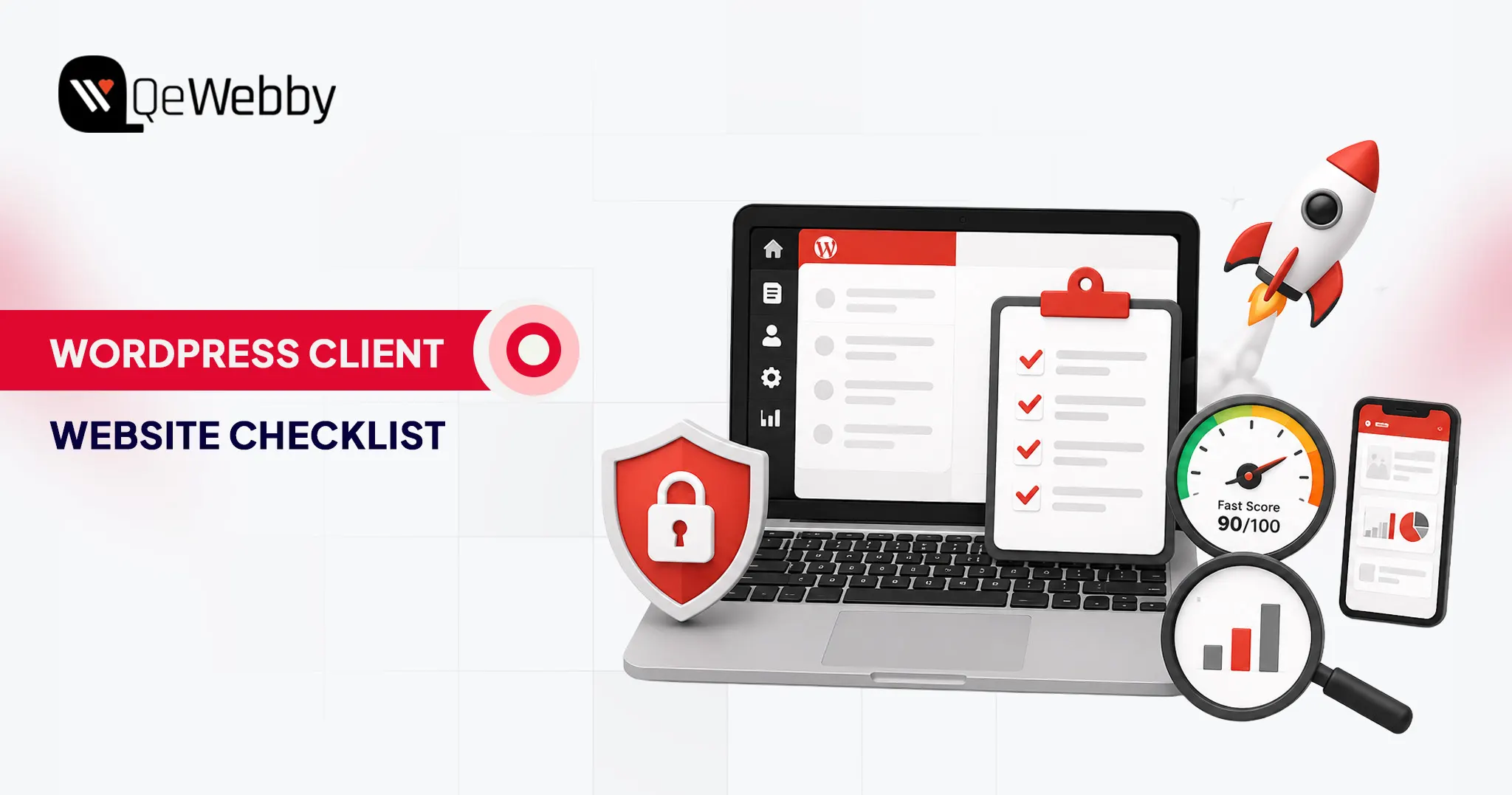
Top 8 WordPress Features to Include in Client Website

A client’s website launch day usually feels like the finish line.

The design is approved. The pages are live. The client is excited.

Then, two weeks later, the problems start.

This happens because many WordPress websites are built to look good, but they are not always prepared to perform.

According to Stanford Web Credibility Research, 75% of users admit they judge a company’s credibility based on its website design. However, credibility is only the first step. Website performance, usability, and functionality determine whether visitors continue engaging with the business.

A successful client website needs more than a modern design and a few pages. It needs the right foundation: security, speed, SEO, analytics, lead generation, and an easy management experience.

That is what separates a website that is simply published from a website that helps a client grow their business.

The Difference Between a Site That Is Built and a Site That Is Ready

There is a big difference between completing a website and preparing it for success.

A built website has:

  • Pages created
  • A professional design
  • Content uploaded
  • A working theme
  • Basic functionality

A ready website goes further.

It has:

  • Security protecting the website from threats
  • Speed optimization, keeping visitors engaged
  • SEO settings helping search engines discover pages
  • Analytics showing measurable results
  • Lead capture systems converting visitors
  • A client-friendly dashboard for easy updates
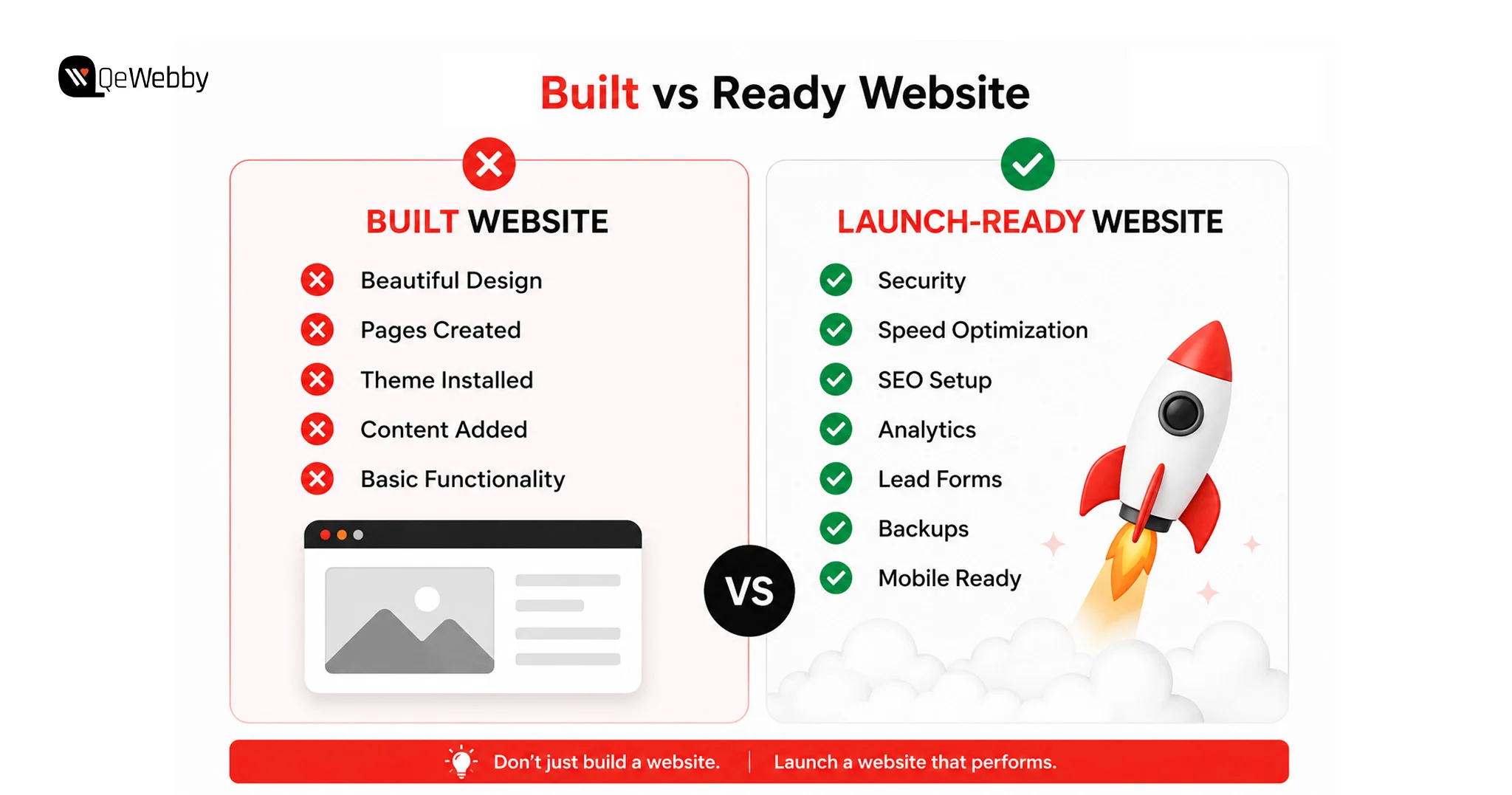
Built Ready Website

A complete WordPress development checklist for agencies should include everything needed for performance, usability, security, and long-term maintenance.

The 8 WordPress features below should be treated as a pre-launch checklist before any client website goes live.

8 WordPress Features Every Client Website Should Have

Feature Why It Matters
Secure login and user role management Protects the website while giving clients the right access
Client-friendly WordPress dashboard Makes website management easier after handoff
Speed and performance optimization Improves user experience and search visibility
Security and backup system Protects against data loss and website attacks
Mobile-responsive design Ensures the site works across devices
SEO foundation setup Helps Google understand and rank website content
Lead generation features Converts visitors into enquiries and customers
Analytics and reporting setup Shows whether the website is achieving results

Schedule a free consultation

Now let’s break down each feature.

#1. Login Setup

A WordPress website often starts with a simple mistake: giving clients more access than they actually need.

Most clients do not need full Administrator permissions.

When a client has complete admin access, they can accidentally:

  • Delete important plugins
  • Change theme files
  • Install conflicting tools
  • Modify settings that affect website performance

When something breaks, the developer is usually the first person they call.

A better approach is creating a secure WordPress client site setup where users only get access to the areas they actually manage.

For most clients, the Editor role is enough. They can update pages, publish content, and manage media without having access to critical website settings.

What Every Client Login Setup Should Include

Change the Default Login URL

The standard WordPress login page (/wp-admin) is targeted by automated bots.

Using a plugin like WPS Hide Login helps hide the default login location and reduces unnecessary login attempts.

Enable Two-Factor Authentication

Passwords alone are not enough protection.

Two-factor authentication adds another security layer by requiring users to verify their identity before accessing the dashboard.

Plugins such as WP 2FA make this easier to implement.

Limit Login Attempts

Repeated login attempts are one of the most common attack methods against WordPress websites.

Security plugins such as Wordfence can automatically block suspicious login activity and protect the client site.

Customize the Login Experience

A branded login page creates a more professional handoff experience.

Adding the client’s logo and removing unnecessary WordPress branding helps make the website feel like a dedicated business platform.

A secure login setup is one of the simplest WordPress security features for client websites, but it can prevent major problems later.

#2. Dashboard the Client Can Actually Use Without Calling for Help

The default WordPress dashboard is designed for developers, not everyday business owners.

After logging in, clients often see:

  • Plugin notifications
  • Theme settings
  • Developer tools
  • Technical options
  • Features they will never use

Too many options create confusion.

And a confused client usually means more support requests.

A client-friendly WordPress admin experience should make it easy for users to complete basic tasks without worrying about breaking something.

How to Create a Better Client Dashboard?

Remove Unnecessary Menu Items

Plugins like WP Adminify or Adminimize allow developers to hide:

  • Theme editor
  • Plugin settings
  • Technical tools
  • Unused dashboard sections

The client should only see what they need.

For example:

  • Pages
  • Posts
  • Media
  • Forms
  • Website analytics

Add a Welcome Guide

A simple welcome message can reduce future confusion.

Include:

  • Website update instructions
  • Important links
  • Contact information
  • A short training video

A five-minute Loom walkthrough can save hours of future support conversations.

Add Analytics Visibility

Clients want proof that their website is working.

Adding a dashboard analytics widget allows them to see:

  • Website visitors
  • Popular pages
  • Traffic sources
  • Leads generated

A well-organized dashboard improves the handoff experience and helps clients feel confident managing their website after launch.

#3. Speed Optimization

A website can have an impressive design, strong messaging, and all the right pages, but none of that matters if visitors leave before the page finishes loading. Research from Google shows that as page load time increases from 1 second to 5 seconds, the probability of a mobile visitor leaving increases by 90%.

Website speed is one of the first experiences users have with a brand. A slow website creates friction, reduces engagement, and can directly affect conversions. For businesses investing in a WordPress website, performance is not just a technical requirement; it is part of the customer experience.

Many developers focus heavily on design during the development phase and treat performance as something to fix later.

A proper WordPress speed optimization checklist ensures the website is built for performance from the beginning.

What Makes a WordPress Website Slow?

Most slow websites are not caused by one single issue. Performance problems usually come from multiple small factors working together.

Large image files increase page size. Too many plugins add unnecessary scripts. Poor hosting slows down server response times. Without caching, the website has to rebuild the same resources repeatedly for visitors.

The goal of optimization is not simply to achieve a better speed score. The goal is to create a website that feels fast and responsive for real users.
Optimize My Website

The Speed Setup Every Client Website Needs Before Launch

The first step is reducing unnecessary load on the website. Images should be compressed before uploading and converted into modern formats like WebP wherever possible. This reduces file size while maintaining visual quality.

Caching is another important part of performance optimization. A caching plugin stores frequently used website resources so pages can load faster instead of rebuilding everything with every visit. Tools like WP Rocket and LiteSpeed Cache are commonly used solutions for WordPress websites.

A Content Delivery Network (CDN) can further improve loading speed by delivering website assets through servers closer to visitors. Cloudflare is a popular option that also provides additional security benefits.

Before handing over the website, developers should always test performance using tools like Google PageSpeed Insights. This helps identify issues related to loading speed, mobile performance, and Core Web Vitals.

A fast website creates a better experience for visitors and gives clients a stronger foundation for SEO, conversions, and long-term growth.

Website speed improvements don’t end after launch. Regular performance audits help identify new bottlenecks caused by plugin updates, theme changes, or growing content libraries. Explore our WordPress Speed Optimization Services to keep your website fast as it grows.

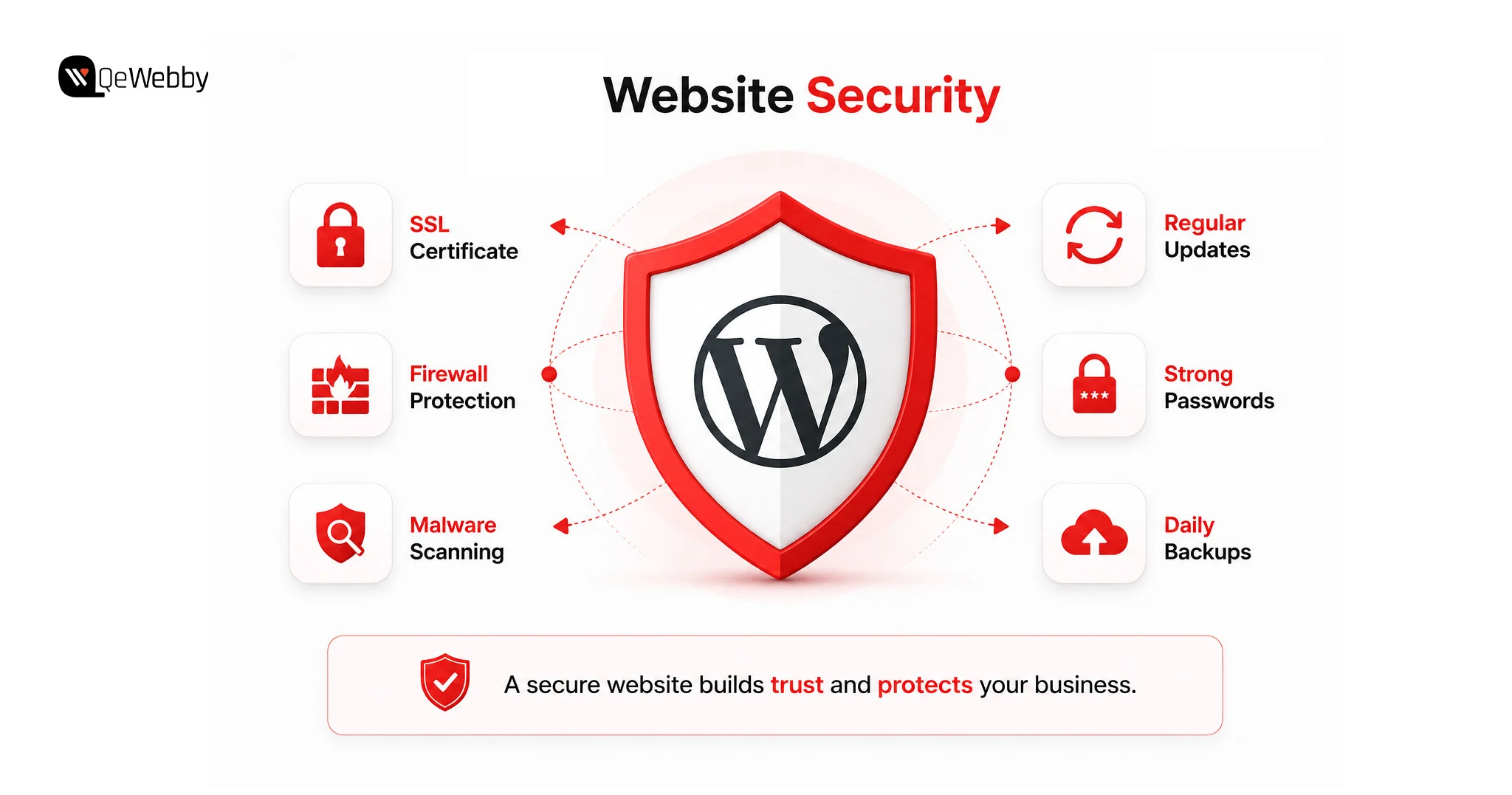
#4. Security and Backups

Security is one of the most overlooked WordPress features for client websites.

A website can work perfectly for months and then suddenly face problems because of outdated plugins, weak passwords, malware, or failed updates. When that happens, the client does not see it as a technical issue. They see it as a business problem.

That is why security should be handled before launch, not after something goes wrong.

A professional WordPress client site setup should include both prevention and recovery. Protecting a website from threats is important, but having a reliable backup system is what helps restore operations quickly when unexpected issues occur.

Why Backups Should Be Ready Before Handoff

One of the biggest mistakes developers make is assuming clients will manage backups themselves.

Most clients are focused on running their business. They are unlikely to monitor backup schedules, check whether files are stored correctly, or test if a backup can actually restore the website.

A complete backup system should already be configured before the website is delivered.

Security plugins like Wordfence help protect websites through features such as firewall protection, malware scanning, and login monitoring. Automated backup solutions like UpdraftPlus help maintain copies of the website that can be restored when needed.

The backup location also matters. Keeping backups only on the same server as the website creates risk because a server issue can affect both the live site and the backup.

A reliable setup usually includes:

  • Automated scheduled backups
  • Off-site storage
  • Regular restore testing
  • Multiple recovery points

Beyond backups, basic security practices should also be completed before launch. SSL should be enabled, unnecessary plugins should be removed, administrator access should be limited, and features like the WordPress file editor should be disabled to reduce accidental changes.

For businesses that want ongoing protection after launch, a WordPress maintenance service for clients can provide continuous security monitoring, updates, backup checks, and technical support.

Website security requires continuous monitoring rather than one-time setup. Regular updates, malware scanning, uptime monitoring, and backup verification help keep your website protected long after launch. Learn how our WordPress Maintenance Services help businesses maintain secure and reliable websites.

#5. Mobile-First Design

A website that looks perfect on a desktop screen can still fail where many customers actually browse: mobile devices.

Mobile responsiveness is no longer an optional design feature. It is a core requirement of every WordPress website launch checklist. According to Statista, mobile devices generate more than half of global website traffic, making mobile optimization a core requirement rather than an optional improvement.

Visitors expect pages to load correctly, buttons to work easily, and content to remain readable regardless of the device they use.

Google also evaluates websites with a mobile-first approach, which means the mobile experience plays an important role in search visibility.

Why Mobile Testing Should Happen Before Launch

A common development mistake is building the entire website on a desktop and checking mobile only at the end.

This often creates avoidable problems.

A layout that works on a large screen may feel crowded on mobile. Buttons may become difficult to tap. Images may slow down the experience. Forms that work perfectly on desktops may become frustrating on smaller screens.

Testing mobile throughout the development process makes it easier to identify and fix these issues.

What Developers Should Review Before Delivery

Every important page should be tested on real devices, not only browser previews.

The homepage, service pages, contact forms, and conversion-focused sections should be checked to ensure:

  • Text remains easy to read
  • Navigation works smoothly
  • Buttons are easy to tap
  • Images display correctly
  • Forms function properly

Mobile speed should also be tested separately because performance on smartphones is often different from desktop.

A mobile-friendly website improves user experience, supports SEO performance, and helps clients avoid losing potential customers because of usability issues.

#6. SEO Foundation

A website launch is not complete when the pages go live.

It is complete when search engines can understand the website, users can discover it, and the business has a chance to attract organic traffic.

Many clients realize months after launch that their website is not generating visitors. The reason is often simple: SEO was considered a future task instead of part of the initial WordPress development checklist.

SEO needs to be built into the website foundation.

What Every Client Website Needs Before Going Live

The first step is configuring an SEO plugin such as Rank Math or Yoast SEO. These tools help manage important elements like metadata, XML sitemaps, and content optimization.

Every important page should also be reviewed before launch. The homepage, service pages, about page, and contact page should have clear titles, descriptions, proper heading structure, and content aligned with search intent.

Technical SEO settings also matter.

The XML sitemap should be submitted through Google Search Console so search engines can discover website pages efficiently. Schema markup should be added where relevant to provide more context about the business.

One simple setting can also prevent an entire website from appearing in search results. Developers should always confirm that the “Discourage search engines from indexing this site” option is disabled before moving a website from staging to live.

SEO is not something added after a website is finished. It is one of the core WordPress features that helps transform a website from a digital presence into a business growth tool.

Building a strong SEO foundation is only the beginning. Regular technical audits help identify crawl issues, indexing problems, broken links, and performance improvements that support long-term organic growth. Our Technical SEO Services help businesses maintain healthy, search-friendly WordPress websites.

#7. Contact Forms and Lead Capture

A client website is not built just to exist online. According to HubSpot, businesses that prioritize conversion optimization can significantly improve their ability to turn website visitors into leads. Small improvements in forms, CTAs, and user journeys can directly influence enquiry rates.

The website is built to help the business generate enquiries, bookings, sales, or conversations with potential customers.

This is where many websites fail.

They look professional, have impressive designs, and contain all the right information, but they make it difficult for visitors to take the next step. A missing contact form, unclear call-to-action, or broken enquiry process can turn valuable traffic into lost opportunities.

Lead generation should be treated as one of the most important WordPress features for client websites because it directly connects website performance with business outcomes.

Why Lead Capture Should Be Part of the Website Foundation

A common mistake is treating contact forms as a simple page element instead of a conversion system.

A well-designed website guides visitors toward action. It answers their questions, builds trust, and makes contacting the business simple.

For example, a visitor who lands on a service page should not have to search through the website to find a way to connect. The next step should be clear.

A strong lead capture setup includes more than just adding a form. Developers should consider where the form appears, what information it collects, how submissions are handled, and whether the client receives notifications properly.

Before handoff, every form should be tested from the user’s perspective.

Does the form submit correctly?

Does the client receive the enquiry?

Does the visitor get confirmation?

Small details like these often determine whether a website becomes a business tool or just an online brochure.

The Lead Generation Setup Every Client Website Needs

For most businesses, a simple and effective form works better than a complicated one.

Forms should collect only the information required to start a conversation. Asking for too many details can discourage visitors from completing the submission.

Plugins such as WPForms and Gravity Forms provide flexible options for creating professional contact forms.

A complete setup should include:

  • A clear call-to-action placed on important pages
  • Confirmation messages after submission
  • Email notifications for the client
  • Mobile-friendly form design
  • Conversion tracking for submissions

Adding options like WhatsApp contact buttons can also improve accessibility, especially for businesses that receive customer enquiries through mobile devices.

A website’s success is not measured by how many people visit it. It is measured by what those visitors do next.

#8. Analytics and Reporting

One of the biggest challenges after launching a website is proving that it is working.

Clients often ask:

“How many people are visiting?”

“Which pages are getting attention?”

“Are we receiving leads from the website?”

Without analytics, these questions become difficult to answer.

That is why the analytics setup should be completed before launch, not added months later.

A professional WordPress client website checklist should always include tracking systems that help measure performance from day one.

Why Analytics Matters After Website Launch

A website without analytics is like running a business without knowing where customers come from.

Analytics provides insights into:

  • Visitor behaviour
  • Traffic sources
  • Popular pages
  • Conversion activity
  • User engagement

This information helps businesses understand what is working and where improvements are needed.

It also changes the client conversation.

Instead of discussing whether the website “feels successful,” developers and clients can look at actual data.

The Analytics Setup Every Client Site Needs

Google Analytics 4 should be connected before the website goes live. This allows businesses to start collecting visitor data immediately.

Tools like MonsterInsights make it easier for non-technical clients to view important information directly inside WordPress.

Google Search Console should also be connected because it provides valuable insights into search visibility, keywords, and website indexing.

The most important step is tracking conversions, not just visitors.

A client does not only need to know that 5,000 people visited the website. They need to know how many people filled out a form, requested information, or completed a valuable action.

For agencies offering a WordPress website development service, including analytics setup and performance reporting, creates additional value. Clients are more likely to invest in long-term improvements when they can clearly see results.

Recommended Plugins for a Complete WordPress Client Website Setup

Choosing the right plugins is an important part of building reliable WordPress websites.

However, the goal should not be installing dozens of tools. Too many plugins can create maintenance issues, slow down the website, and make management more complicated.

A better approach is selecting plugins that solve specific business needs.
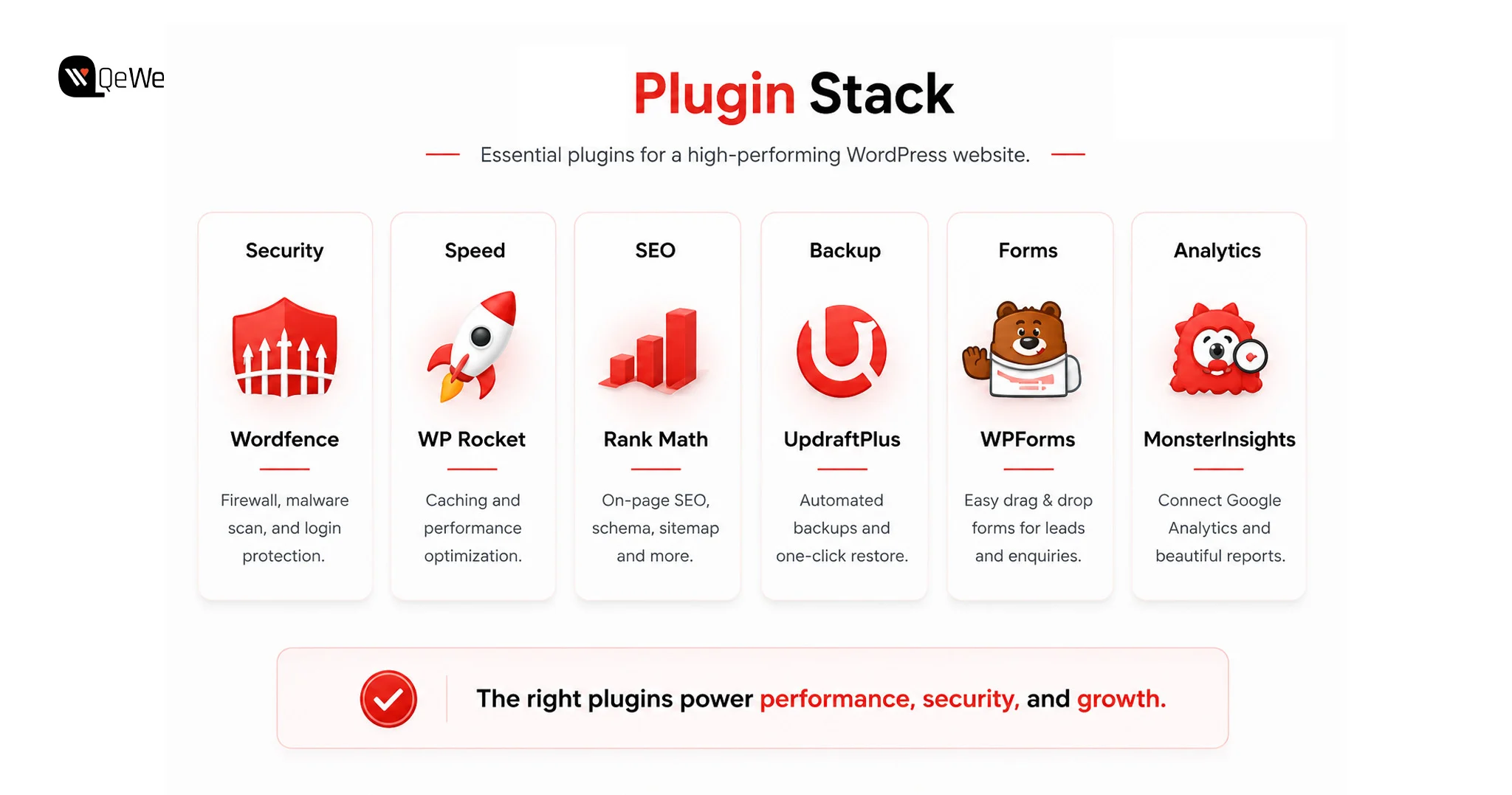
Plugin Stack

Website Need Recommended Plugin Options
Security Wordfence, Solid Security
SEO Rank Math, Yoast SEO
Speed Optimization WP Rocket, LiteSpeed Cache
Backups UpdraftPlus
Contact Forms WPForms, Gravity Forms
Analytics MonsterInsights, Google Site Kit
Login Protection WP 2FA, Loginizer
Dashboard Management WP Adminify, Adminimize

The right plugin stack supports the website without creating unnecessary complexity.

Mistakes Developers Make When Delivering WordPress Client Websites

Building a website is only one part of the job. The handoff process determines whether the client feels confident or frustrated.

Many common problems happen because important steps are skipped before delivery.

One mistake is focusing only on appearance. A beautiful website without SEO, analytics, security, or lead capture is incomplete.

Another mistake is giving clients unrestricted access without explaining what they should manage. Full administrator access may create unnecessary risks if users accidentally change important settings.

Ignoring maintenance planning is another missed opportunity. Websites require ongoing updates, security monitoring, and performance checks after launch.

A professional developer does not just deliver a website. They create a system that continues working after the project ends.

What Happens After You Hand Over the Website? The 30-Day Client Success Window

Most WordPress guides focus on building the website.

But the real test begins after launch.

The first month after handoff is when many client relationships are either strengthened or damaged.

During the first few weeks, clients usually experience similar challenges.

They log in and wonder where to make updates. They see plugin update notifications and are unsure whether clicking “update” is safe. They upload large images without understanding how they affect speed. Eventually, they ask whether anyone is visiting the website.

This is where proper preparation makes a difference.

Build WordPress Client Websites That Work Beyond Launch Day

A successful WordPress website is not defined by how it looks on launch day. It is defined by how well it supports the client’s business months later.

The strongest WordPress client websites combine design with the features that matter behind the scenes: security, speed, SEO, analytics, lead generation, and easy management.

Using this WordPress client website checklist before every launch helps developers deliver more reliable projects, reduce support issues, and create better long-term relationships with clients.

A website should not just be delivered.

It should be prepared to perform.
Talk to WordPress Expert

Conclusion

A successful website is not only measured by its launch but by how well it adapts as a business grows. The right foundation allows businesses to add new content, improve customer experiences, and make informed decisions without rebuilding everything from scratch. This is where strategic WordPress development makes a difference.

QeWebby helps businesses create WordPress solutions that are structured for performance, scalability, and easier management. With a focus on thoughtful development practices and business-driven outcomes, QeWebby enables clients to build websites that support their evolving digital needs.

Whether you’re launching a new website or improving an existing one, combining a structured WordPress QA Checklist, regular maintenance, and technical audits helps create a website that’s ready for long-term growth.

To discuss how you can create a website built for long-term success, contact us and explore the right WordPress solution for your business.
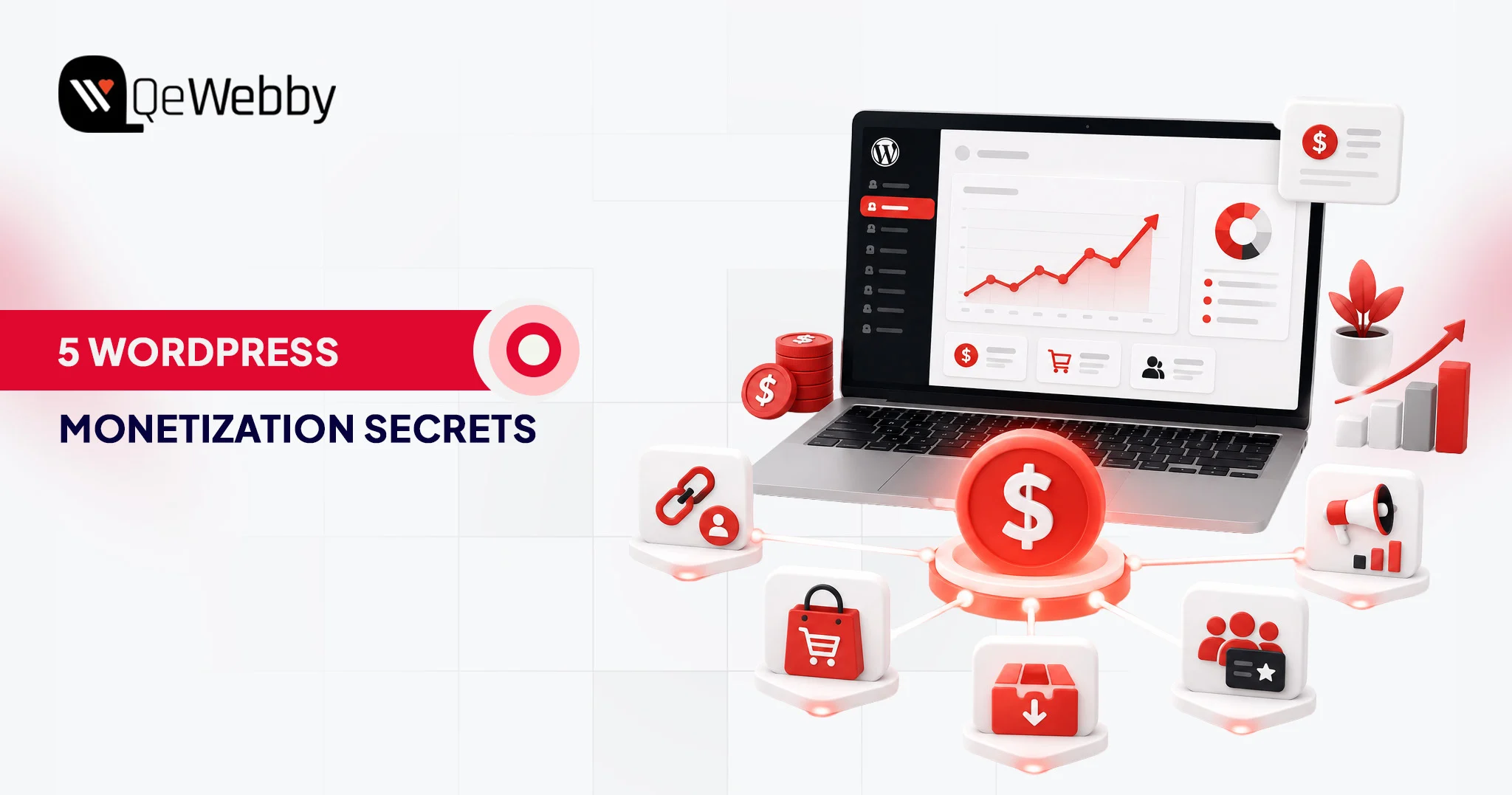
How to Monetize a WordPress Blog: 5 Strategies That Work in 2026

You have been publishing consistently. Traffic is slowly growing. The blog looks active. But the income dashboard is still empty.

That is where most “how to make money blogging” advice becomes frustrating. It tells you to add ads, join affiliate programs, write more posts, and wait. Technically true. Practically incomplete.

The truth of the matter is, only a handful of bloggers make their blog a profitable venture. The big money makers aren’t generating revenue by posting random content and hoping an audience magically appears.

For most new bloggers, ads are the slowest method to monetize. The revenue is typically based on sheer volume. If a blog earns $5 to $25 per 1,000 pageviews, making just $500 per month can require 20,000 to 100,000 monthly visitors.

Most new bloggers are not anywhere close to that amount. And this blog is the solution for anyone ready to skip the high-traffic waiting game. We are going to break down high-leverage strategies like targeted affiliate partnerships, premium digital products, and strategic consulting that actually turn a small, engaged audience into sustainable revenue.

Secret 1: Affiliate Marketing Done the Right Way

Why do Most Bloggers Get Affiliate Marketing Wrong?

Dropping random affiliate links into blog posts is not affiliate marketing. It is wishful thinking.

Real affiliate marketing for bloggers starts with buyer intent. The highest-converting posts are not generic informational articles. They are comparison posts, “best tools for” lists, honest reviews, tutorials, and alternative pages.

A reader searching “best email platform for beginner bloggers” is already evaluating options. That reader is far closer to buying than someone reading “what is email marketing?” That is the difference.

If you want to know how to monetize a WordPress blog with affiliate income, build content around decisions. Help readers compare. Help them choose. Make the recommendation clear.

How to Set Up Affiliate Marketing on WordPress Properly?

Start with affiliate programs that match your niche. Amazon Associates, ShareASale, Impact, PartnerStack, and niche-specific private programs are good starting points.

Then install a link management plugin such as ThirstyAffiliates or Pretty Links. These tools help you manage, cloak, organize, and track affiliate links from one dashboard.

Research matters more than most bloggers admit. Read Amazon reviews, Reddit threads, YouTube comments, and niche forums. Find what real buyers love, hate, and regret. That gives your content angles that generic roundups miss.

Feature DIY WordPress Maintenance Managed WordPress Maintenance
Cost (Estimation) $0–$100/month $100–$500+/month
Time Commitment 5–15+ hours/month (staffed) Minimal (provider handles most tasks)
Required Expertise Moderate to high technical troubleshooting skills Minimal WordPress usage/familiarity
Security & Risk Manual, expertise-dependent; higher exposure Proactive, expert auditing, 24/7 monitoring
Performance Manual optimization; plugin/setup dependent Server, CDN, cache optimized by experts
Scalability & Support Poor, increasingly complex with growth Automated scaling, multi-site support

Secret 2: Selling Digital Products Is the Highest Margin Method Nobody Talks About

Why Do Digital Products Change the Income Game?

Digital products change the math because you create once and sell repeatedly. No inventory. No shipping. No stock limits. Almost no cost per additional sale.

That is why selling digital products on WordPress can outperform ads for many bloggers. A $19 template only needs 27 sales to cross $500. A blog relying on ads may need tens of thousands of pageviews for the same result.

The best digital products solve one specific problem for one specific reader. “Blogging ebook” is weak. “30 Affiliate Review Templates for Food Bloggers” is clear. Precision sells because the buyer immediately understands the outcome.

What Actually Sells and How to Launch It on WordPress?

Product Type Realistic Price Range
eBooks $9 to $49
Notion templates $9 to $39
Spreadsheet planners $15 to $79
Printable toolkits $7 to $29
Mini courses $49 to $299
Swipe files $19 to $99

If you’re planning to build a full digital storefront, our WooCommerce Development Services can help you create a scalable selling experience.

Secret 3: The Membership Model Gives Bloggers Predictable Monthly Income

Why Are Memberships the Smartest Long-Term Revenue Play?

Ad income fluctuates with traffic. Affiliate income fluctuates with buying intent. Sponsored content depends on brand budgets. Membership income is different.

It provides a steady stream of income for bloggers. Assume 100 members who pay $10 monthly. This is $1000/monthly recurring income from a small number of readers who trust that the blogger will provide more than what they get for free.

This is one of the strongest WordPress blog monetization strategies for bloggers with a loyal audience.

What Goes Inside a WordPress Membership?

Membership Asset Example
Exclusive content Advanced tutorials or private guides
Templates Downloadable resources
Community access Private forum or group
Monthly calls Q&A, coaching, audits
Resource library Checklists, swipe files, examples

Put together a WordPress membership site with MemberPress or Paid Memberships Pro. BuddyPress can assist you to create your personal member space when the offer features community. Give a discount to the first 20 (or 50) people to build momentum and establish proof.

Secret 4: The Email List Is Worth More Than the Blog Itself

An email list is not an add-on. It is the revenue engine. Search traffic discovers you. Email lets you reach the reader again without waiting for Google, Pinterest, Instagram, or any platform algorithm.

That is why email list monetization should start from the first blog post. Not after the site is ready. Not after traffic grows. Not after 50 articles.

A targeted list of 1,000 subscribers can outperform a blog with 50,000 monthly visitors if the subscribers trust the writer and the offers match their problems.

Method How It Works
Affiliate promotions Recommend relevant tools directly
Product launches Sell templates, ebooks, or courses
Sponsored newsletters Let brands reach your audience
Membership invites Convert loyal readers into members
Service offers Sell audits, consulting, or setup help

Use any of ConvertKit, Mailchimp, FluentCRM, or MailPoet. Place opt-in forms in posts, at the end of articles, and on high-traffic pages. Provide a ‘freebie’ like a checklist, template, planner or mini email course.

If you plan to use a WordPress blog setup service, you will get a professional blog setup the right way from the beginning, including the technical aspects such as having fast-loading pages, capturing emails, lead magnets, analytics, product pages, and conversion paths.

The Email List Images

Secret 5: Sponsored Content Pays Fast Even With a Small Audience

Sponsored Content can generate quicker income than almost any other monetization technique. No need to have a lot of followers. You must have the correct target market.

A food blog that has 3,000 loyal readers is more beneficial to a kitchen brand than a general lifestyle blog with 50,000 visitors who aren’t necessarily loyal to the brand. Attention, trust, and relevance are all paid for by brands.

This is the reason why a small niche blog may be able to secure sponsored content blog deals ahead of being accepted by an ad network. Traffic is useful. It is best to use audience fit.

Item What to Add
Monthly traffic Pageviews and sessions
Email list size Subscriber count and open rate
Audience profile Niche, location, interests
Content examples Best-performing posts
Sponsorship options Blog post, newsletter, bundle
Starting rates Clear pricing range

Include appropriate rel=sponsored or rel=nofollow attributes to paid links. If you are pitching brands on your WordPress website, before pitching brands or selling products, make sure your website looks trustworthy. Follow our WordPress Security Checklist to secure your site before approaching sponsors.

The Thing Every Blogger Searches For But Nobody Honestly Answers: How Long Before This Actually Makes Real Money?

Every monetization blog talks about methods. Very few give honest timelines. That matters because unrealistic expectations kill more blogs than bad writing.

Timeline What Usually Happens Realistic Income
Months 1 to 3 Setup, publishing, indexing, list building $0
Months 3 to 6 First affiliate commissions $50 to $300/month
Months 6 to 12 Affiliate income plus first digital product $300 to $1,000/month
Months 12 to 18 Email list grows, first brand deals, membership test $1,000 to $3,000/month
Month 18+ Multiple revenue streams working together $3,000 to $10,000+/month

Most bloggers quit before month 12. That is the painful part. The income is usually back-loaded. Early work compounds slowly, then suddenly the blog has search rankings, subscribers, affiliate posts, product pages, and brand credibility working at the same time.

Bloggers who want a professional monetization setup can use a WordPress website monetization service to handle payment gateways, membership configuration, email integrations, product pages, analytics, and sponsored content setup.

Plugin Quick Reference: What to Use for Each Monetization Method

Method Best Plugin Free Option
Affiliate Link Management ThirstyAffiliates Pretty Links
Digital Products Easy Digital Downloads WooCommerce
Memberships MemberPress Paid Memberships Pro
Email Capture ConvertKit Forms Mailchimp for WordPress
Display Ads Ad Inserter Advanced Ads
Sponsored Post Disclosure PublishPress Future Sponsored Post Disclaimer

As your blog grows, keeping plugins updated, improving performance, and maintaining security becomes just as important as publishing new content. Explore our WordPress Maintenance Services to keep your website running smoothly.

Stop Treating the Blog Like a Hobby and Start Treating It Like a Business

Bloggers who earn a consistent income are not always smarter or more talented. They simply made better operating decisions. They picked the right monetization method for their stage. They built their email list early. They created content around buyer intent. They sold simple digital products before building complicated funnels. They pitched sponsors once the audience became clear.

That is the real answer to how to monetize a WordPress blog. Pick one method from this list. Set it up this week. One live revenue stream is worth more than five monetization ideas sitting in a notebook.

Every subscriber, affiliate post, digital product sale, and sponsored deal compounds. Choose the method that fits where your blog is right now. Build it properly. Then let the next method stack on top.

Stop Treating the Blog

5 Key Features for Flawless WordPress CRM Plugin Integration

Businesses that use CRM systems see an average increase of 29% in sales. A true CRM integrates directly with your WordPress site, allowing you to streamline your processes and automate repetitive tasks. For example, your CRM can automatically capture leads from contact forms, landing pages, or pop-ups on your WordPress site. Instead of manually entering information, all customer data is organized, segmented, and stored in a single database.

Specifically, when your CRM is synced with your WordPress site, the possibilities multiply. A connected system allows for real-time updates on customer data, ensuring your team is always working with the latest information. It bridges the gap between marketing, sales, and customer support, ensuring every team has access to the insights they need to improve customer experiences and drive growth.

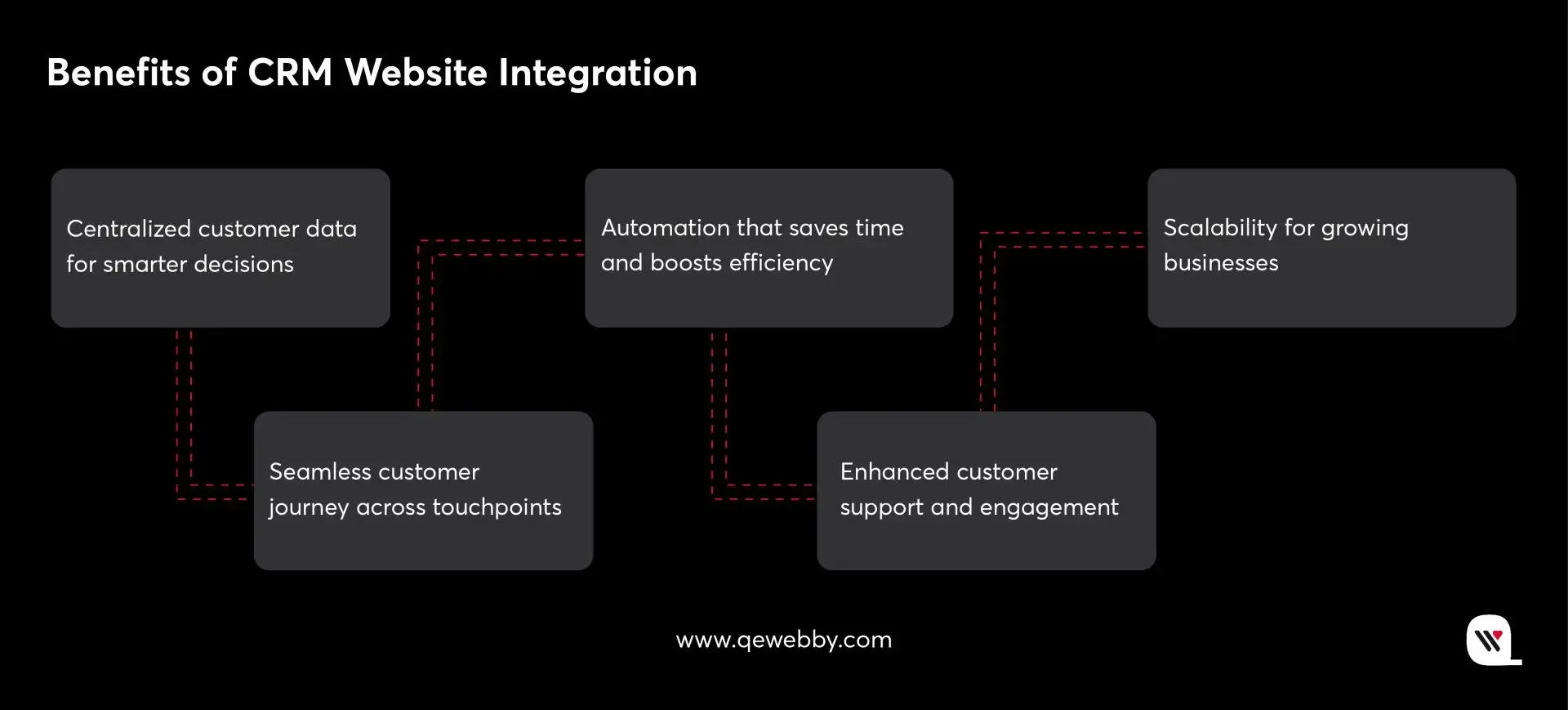
Benefits of CRM Website Integration

Simply having a WordPress website isn’t enough—business leaders need to leverage data, optimize workflows, and offer personalized experiences to stay ahead. Here’s how CRM integration with WordPress can help you do exactly that:

Centralized Customer Data for Smarter Decisions

One of the most significant advantages of CRM integration is having all your customer data in one place. With this consolidated data, you can track customer behaviors, identify trends, and segment audiences more effectively. For instance, knowing which pages a visitor interacts with most can help you tailor marketing messages or promotions, increasing the likelihood of conversions. It’s about using data to take your customer relationships from transactional to transformational.

Seamless Customer Journey Across Touchpoints

Your customers engage with your business across multiple touchpoints—your website, social media, emails, and customer support. Integrating your CRM with WordPress ensures that all these touchpoints are connected, creating a seamless and cohesive customer experience. Whether it’s a personalized follow-up email, an automated discount offer, or an insightful recommendation, CRM integration helps you maintain that all-important personal touch without the need for constant manual input.

Automation That Saves Time and Boosts Efficiency

Automation is one of the key benefits that CRM integration brings to your WordPress site. With automated workflows, you can handle repetitive tasks, such as lead follow-ups, email marketing campaigns, and customer reminders, without lifting a finger. Moreover, these automated processes run 24/7, freeing up your team to focus on more strategic initiatives while ensuring no lead or customer is left behind.

Enhanced Customer Support and Engagement

When a customer reaches out via your site, the CRM automatically logs their issue, history, and prior interactions. This enables your support team to provide faster, more informed responses, ultimately improving customer satisfaction. Plus, CRM integration with WordPress gives you the ability to automate responses, set up reminders for follow-ups, and track ongoing issues—helping your team resolve cases efficiently while maintaining a high standard of service.

Scalability for Growing Businesses

Whether you’re a small startup or a large enterprise, a CRM can grow with you, ensuring that you never outgrow your system. You can add more features, integrate additional tools, or scale your automation workflows as needed—all without disrupting the user experience or workflow.

Key Features Of CRM Plugin in WordPress

1. Content Management and Segmentation
  • An effective CRM will allow you to gather, store, and organize customer data (such as email addresses, phone numbers, interactions, and behavior) in a centralized database.
  • Once your data is organized, segmentation allows you to categorize your customers based on shared characteristics, such as demographics, buying behaviors, or engagement levels. This way, you can deliver more targeted and personalized communication, whether it’s through email marketing, tailored offers, or customer service follow-ups.

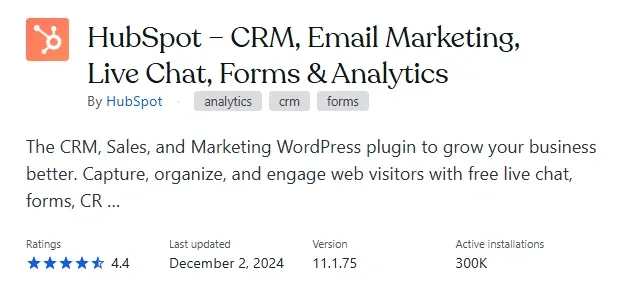
HubSpot CRM automatically captures leads from forms and tracks customer interactions, making segmentation easy.

2. Lead Capture and Management

  • Integrating your WordPress site with your CRM enables automatic lead capture from forms, landing pages, and pop-ups. The CRM will then categorize, score, and assign leads to your sales team, ensuring no opportunity slips through the cracks.
  • CRM systems can even trigger automated follow-up actions based on lead behavior, ensuring you’re engaging with prospects at the right time. This automation not only saves time but ensures a consistent approach to managing leads and opportunities.

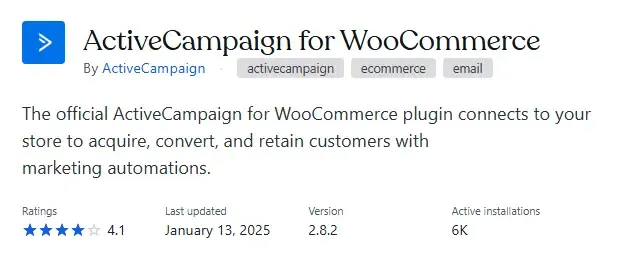
Active Campaign offers form integration that automatically pushes leads into the CRM, where they can be nurtured through email sequences.

3. Email Marketing Automation

  • With CRM integration, you can automate your email marketing campaigns based on customer behavior and interactions. For example, after a visitor signs up for your newsletter or abandons their cart, your CRM can automatically trigger personalized emails designed to move them through the sales funnel.
  • By combining customer data with behavior insights, you can craft email campaigns that feel highly personalized—building stronger connections with your audience.

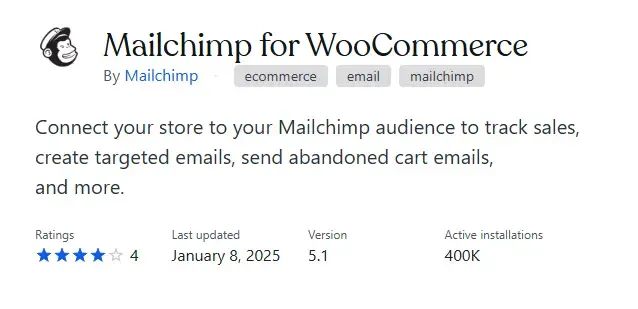
Mailchimp offers advanced email automation features, including automated welcome emails, follow-ups, and cart recovery emails.

4. Sales Pipeline and Deal Tracking

  • Sales teams thrive on organized workflows and efficient pipeline management. Integrating your WordPress site with a CRM that supports sales pipeline management is critical for tracking and converting leads into customers.
  • Many CRMs offer visual pipelines, sales forecasting, and task automation to keep the process smooth and efficient.

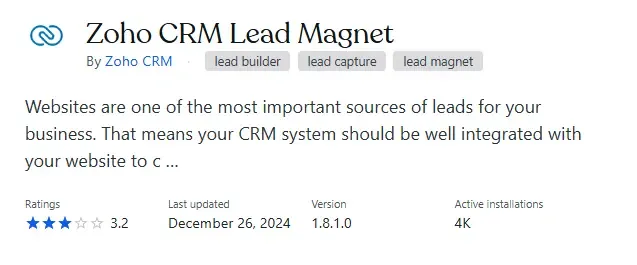
Zoho CRM offers a seamless WordPress integration that allows you to track and manage deals, automate sales workflows, and forecast revenue.

5. Analytics and Reporting

  • Having access to data-driven insights is crucial for making informed decisions. With CRM integration, you can access powerful analytics and reporting tools that give you real-time visibility into your customer interactions, sales performance, and marketing campaigns.
  • Tracking key performance metrics, such as conversion rates, email open rates, and website traffic can be used to refine your strategies, optimize your content, and improve customer targeting.

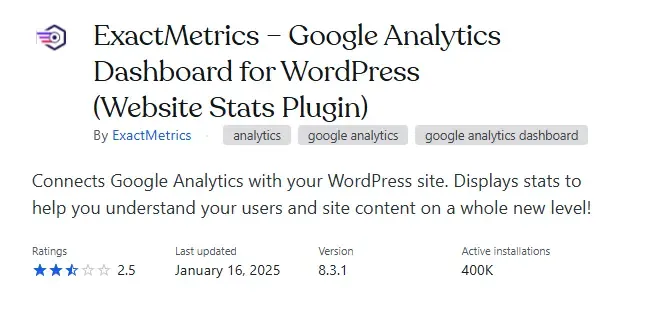
Google Analytics Dashboard for WP (Not a CRM plugin on its own) integrates Google Analytics with your WordPress site, providing the valuable data you need to enhance CRM performance and optimize your site’s marketing efforts.

Whether it’s lead capture, sales pipeline management, email marketing automation, or customer support, integrating the right CRM features will streamline your processes, increase your team’s productivity, and ultimately drive better customer experiences.

Choosing the Right CRM for Your WordPress Website

Implementing a CRM can dramatically improve how you manage customer relationships, streamline your business operations, and enhance your marketing efforts. Keep these essential factors in mind when choosing the best CRM for your needs:

  • Ensure Easy Integration: Choose a solution that connects effortlessly with your forms, landing pages, and eCommerce tools without requiring complex setups or technical knowledge.
  • Prioritize Scalability: Select a CRM that grows with your business. It must handle increased leads, customers, and workflows as your business expands, so you never outgrow your system.
  • Demand Customization Flexibility: The CRM should be fully customizable to fit your unique business needs. Look for options that allow you to create custom fields, modify reports, and adjust user roles to align with your workflow.
  • Stick to Your Budget: Choose a CRM that fits within your budget while still delivering essential features. Take advantage of free versions or tiered pricing plans that offer flexibility as your business needs change.
  • Focus on Ease of Use: The CRM must be intuitive and easy for your team to use. A user-friendly interface ensures quick adoption, reduces the need for extensive training, and enables your team to get started immediately.
  • Demand Excellent Customer Support: Reliable customer support is non-negotiable. Ensure the CRM provider offers accessible channels like live chat, comprehensive help documentation, and training resources to resolve any issues swiftly.
  • Automate Key Processes: Look for CRM solutions with powerful automation features. Automate email marketing, lead nurturing, and task management to improve efficiency and reduce manual work.
  • Leverage Analytics for Better Decisions: The CRM must offer robust analytics and reporting tools. Track key metrics such as customer engagement, sales performance, and campaign success to make informed, data-driven decisions.

Transform your customer relationships today!

Let’s integrate a CRM solution for your WordPress site.

Let’s Connect

Take the Next Step with CRM Website Integration

Whether you’re looking to automate lead generation, enhance customer service, or gain deeper insights into customer behavior, the right CRM can make a world of difference. Our expert team has years of experience in customizing CRM solutions to meet the unique needs of our clients. From setting up automated workflows to ensuring seamless synchronization with your WordPress site, we’ll guide you every step of the way.

Contact us today to get started with a consultation, and let’s take your customer relationships to the next level.

Contact Form 7 vs. WPForms – A Business Owner’s Guide

Companies generating 40% or more of their leads through online forms grow 4X faster than those relying on offline channels. [Hinge Marketing]

An effective contact form is indispensable for any business website. It streamlines communication, enhances user experience, and supports your lead generation efforts while reflecting your business’s commitment to professionalism. Hence, by focusing on the unique needs of businesses, this article aims to simplify the decision-making process, ensuring you select the contact form solution that best supports your business objectives and drives your online success. Let’s learn more about this!

Finding the Right Contact Form Plugin for Your WordPress Site

When it comes to optimizing your WordPress website’s contact capabilities, the choice of plugin can make a significant difference. Among the leading options are Contact Form 7 and WPForms, each offering distinct advantages to cater to various business needs. Whether you need a basic solution or a robust, feature-rich tool, understanding the unique benefits of each can guide you to the perfect choice for enhancing your website’s communication efficiency.

Ready to find out which contact form plugin suits your WordPress site?

Let’s see when and why each option might be the right choice.

Contact Form 7

Contact Form 7, a long-standing player in the WordPress ecosystem, is celebrated for its simplicity and flexibility, ideal for straightforward form creation.

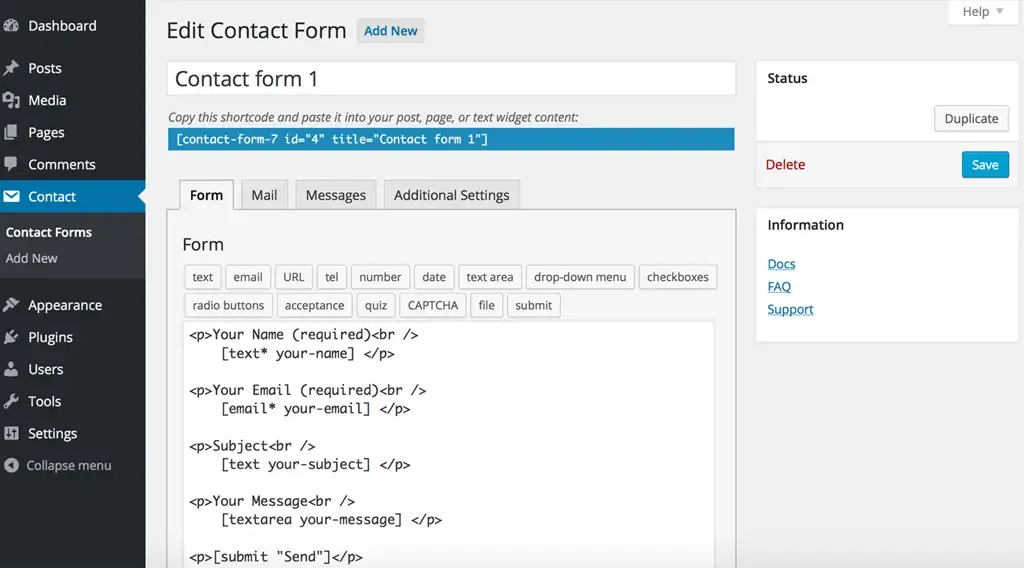
It operates through a text-based interface that requires users to work with HTML and shortcodes. This setup can be quite challenging for beginners, as it demands a certain level of technical knowledge to create and customize forms effectively. The learning curve can be steep, especially for those not familiar with coding. Customizing forms beyond basic functionality requires manual adjustments and a good understanding of HTML and CSS.

With Contact Form 7, users enjoy extensive customization options, but these require working directly with HTML and CSS. The plugin does not include built-in conditional logic, which means implementing advanced features often necessitates additional custom code or third-party add-ons. While there is a broad selection of third-party extensions available, these typically require manual installation and configuration.

It supports a range of third-party services through various add-ons, including popular tools like Mailchimp and Google reCAPTCHA. However, integrating these services often requires manual installation and setup of additional extensions, which can be time-consuming and complex.

Contact Form 7 relies on community-based support through forums, with official assistance being relatively limited. The documentation, while thorough, is often technical and assumes some level of coding knowledge, which might be a barrier for users who are not familiar with programming.

The plugin contact form 7 is entirely free, making it an attractive option for users seeking a no-cost solution. However, advanced features may require additional paid add-ons, which can add to the overall cost if specific functionalities are needed. It is best suited for users who need basic form capabilities and are comfortable with manual configurations.

WP Forms

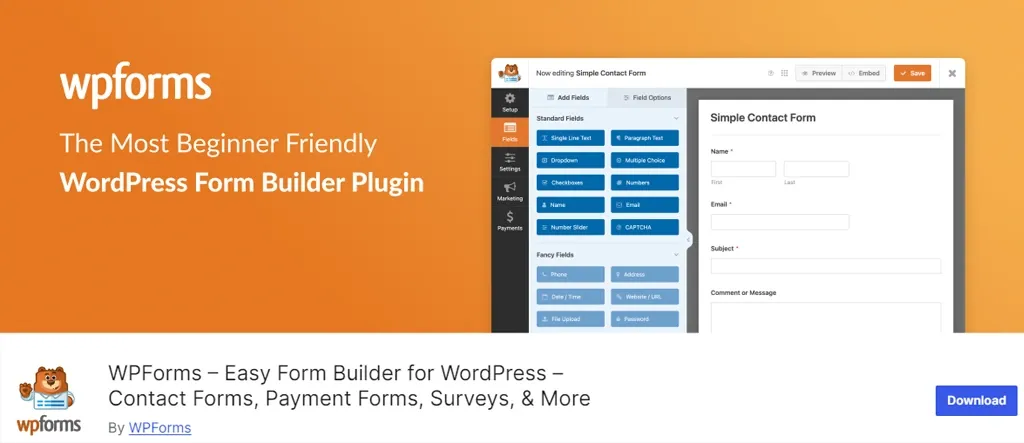
WPForms provides a more intuitive experience with its drag-and-drop builder. This user-friendly interface allows for real-time previews, making it easy for users of all skill levels to design and adjust forms without needing technical expertise. The drag-and-drop functionality simplifies the form creation process, making WPForms ideal for those who want to build forms quickly and efficiently.

It simplifies customization through its drag-and-drop interface and a library of pre-built templates. This plugin includes built-in conditional logic, allowing users to create dynamic forms that respond to user input. Additionally, WPForms comes with a variety of built-in add-ons, especially in its pro versions, covering functionalities such as payment processing, CRM integration, and email marketing, thereby enhancing flexibility and ease of use.

In contrast to Contact Form 7, WPForms offers seamless integration with major services such as PayPal, Stripe, and Mailchimp. The process of connecting these services is straightforward, thanks to its easy-to-configure options. Furthermore, WPForms’ pro versions include a comprehensive array of add-ons that enhance functionality and provide additional integration options, making it easier to extend the plugin’s capabilities.

WPForms offers a more robust support system, including premium options for live chat and email support available with its paid versions. The free version also benefits from community support. The documentation for WPForms is user-friendly, featuring detailed guides and tutorials that are accessible to users of all levels. Paid plans come with responsive support, ensuring that users receive timely help when needed.

What is the best contact form builder?

Contact Form 7 vs WPForms

Feature Contact Form 7 WPForms
Ease of Use Text-based interface; requires HTML/coding Drag-and-drop builder; user-friendly
Customization Extensive with HTML/CSS; no built-in logic Drag-and-drop; includes built-in conditional logic
Integration Supports via third-party add-ons; manual setup Seamless integrations (e.g., PayPal, Mailchimp)
Add-ons Many third-party add-ons; manual installation Comprehensive built-in add-ons; easy configuration
Support Community forums; limited official support Premium support with live chat; extensive documentation
Documentation Technical; requires coding knowledge User-friendly guides and tutorials
Pricing Free; some advanced features require paid add-ons Free version available; pro versions start at $39.50/year

Which Contact Form is Best for Your WordPress Site?

When deciding between Contact Form 7 and WPForms for your WordPress site, it’s essential to consider the specific needs of your business. Different types of websites may benefit from different features offered by these plugins. Here’s a breakdown based on various business sectors:

eCommerce Websites

eCommerce sites benefit from user-friendly contact forms that can handle customer inquiries effectively. WPForms offers features like conditional logic and payment integrations, making it easy for customers to get in touch or make purchases. Contact Form 7 requires more setup for similar functionalities.

We recommend: WPForms for eCommerce Websites

Portfolio and Creative Websites

Artists and freelancers who showcase their work may prefer a minimalist contact form. Contact Form 7 offers straightforward functionality that lets visitors easily reach out without overwhelming them with options.

We recommend: Contact Form 7 for eCommerce Websites

Service-Based Businesses

Service providers need forms that facilitate appointment bookings and inquiries. WPForms includes features for appointment scheduling and customizable fields, creating a seamless booking experience. While Contact Form 7 can be adapted for this purpose, it often requires additional technical work.

We recommend: WPForms for eCommerce Websites

Blog and Personal Sites

For bloggers and personal websites, simplicity is key. Contact Form 7 is lightweight and straightforward, making it a good choice for basic needs. However, WPForms provides a more polished experience that can enhance user engagement.

We recommend: Contact Form 7 for eCommerce Websites

Non-Profit Organizations

Non-profits often need to manage donations and volunteer sign-ups efficiently. WPForms supports donation collection and integrates easily with payment gateways, making it ideal for these needs. Contact Form 7 can be customized, but lacks built-in donation options.

We recommend: WPForms for eCommerce Websites

Corporate Websites

Corporate sites demand professional, branded contact forms. WPForms offers a user-friendly drag-and-drop builder that allows for quick customization, saving time for busy professionals. Contact Form 7 can be styled, but may not be as intuitive.

We recommend: WPForms for eCommerce Websites

Educational Institutions

Schools and universities often need simple forms for inquiries and feedback. Contact Form 7 is easy to implement and can be tailored to collect specific information from students and parents without unnecessary complexity.

We recommend: Contact Form 7 for eCommerce Websites

Local Businesses

Local businesses, such as restaurants and salons, often need basic contact forms for reservations or inquiries. Contact Form 7 is simple to set up and can be customized to fit specific needs without the complexity of advanced features.

We recommend: Contact Form 7 for eCommerce Websites

The Crux

While both Contact Form 7 and WPForms have their strengths, WPForms generally stands out for its advanced features and ease of use, making it suitable for a wide array of businesses. Contact Form 7 is an excellent choice for those seeking a simple, customizable solution, especially in sectors like education, creative portfolios, and local businesses.

By carefully assessing your specific requirements—whether it’s ease of use, integration capabilities, or support options—you can choose the solution that best aligns with your goals. Ultimately, investing in an effective contact form will streamline communication, boost lead generation, and reinforce your commitment to professionalism, paving the way for your online success.

Our team has successfully helped hundreds of business owners navigate this process. Contact us today to unlock our expertise that helps you attract leads and propel your business forward!